On this page
Lyrics with meaning
The complete Lalita Chalisa – two opening dohas, forty chaupais, and a closing doha. A short English meaning sits below every verse. Toggle the script to read in Devanagari, romanized, or both side-by-side.
ललिता चालीसा एक भक्ति गीत है जो ललिता माता पर आधारित है। ललिता चालीसा एक लोकप्रिय प्रार्थना है जो 40 छन्दों से बनी है। ललिता माता के भक्त अपनी मनोकामनाओं की पूर्ति के लिए इस चालीसा का पाठ करते हैं।
lalita chalisa eka bhakti gita hai jo lalita mata para adharita hai| lalita chalisa eka lokapriya prarthana hai jo 40 chandom se bani hai| lalita mata ke bhakta apani manokamanaom ki purti ke lie isa
Verse 1 of the Lalita Chalisa – Sri Vidya devotional praise.
जयति जयति जय ललिते माता। तव गुण महिमा है विख्याता॥
jayati jayati jaya lalite mata| tava guna mahima hai vikhyata||
Verse 2 of the Lalita Chalisa – Sri Vidya devotional praise.
तू सुन्दरी, त्रिपुरेश्वरी देवी। सुर नर मुनि तेरे पद सेवी॥
tu sundari, tripureshvari devi| sura nara muni tere pada sevi||
Verse 3 of the Lalita Chalisa – Sri Vidya devotional praise.
तू कल्याणी कष्ट निवारिणी। तू सुख दायिनी, विपदा हारिणी॥
tu kalyani kashta nivarini| tu sukha dayini, vipada harini||
Verse 4 of the Lalita Chalisa – Sri Vidya devotional praise.
मोह विनाशिनी दैत्य नाशिनी। भक्त भाविनी ज्योति प्रकाशिनी॥
moha vinashini daitya nashini| bhakta bhavini jyoti prakashini||
Verse 5 of the Lalita Chalisa – Sri Vidya devotional praise.
आदि शक्ति श्री विद्या रूपा। चक्र स्वामिनी देह अनूपा॥
adi shakti shri vidya rupa| chakra svamini deha anupa||
Verse 6 of the Lalita Chalisa – Sri Vidya devotional praise.
हृदय निवासिनी-भक्त तारिणी। नाना कष्ट विपति दल हारिणी॥
hrridaya nivasini-bhakta tarini| nana kashta vipati dala harini||
Verse 7 of the Lalita Chalisa – Sri Vidya devotional praise.
दश विद्या है रुप तुम्हारा। श्री चन्द्रेश्वरी नैमिष प्यारा॥
dasha vidya hai rupa tumhara| shri chandreshvari naimisha pyara||
Verse 8 of the Lalita Chalisa – Sri Vidya devotional praise.
धूमा, बगला, भैरवी, तारा। भुवनेश्वरी, कमला, विस्तारा॥
dhuma, bagala, bhairavi, tara| bhuvaneshvari, kamala, vistara||
Verse 9 of the Lalita Chalisa – Sri Vidya devotional praise.
षोडशी, छिन्न्मस्ता, मातंगी। ललितेशक्ति तुम्हारी संगी॥
shodashi, chinnmasta, matamgi| laliteshakti tumhari samgi||
Verse 10 of the Lalita Chalisa – Sri Vidya devotional praise.
ललिते तुम हो ज्योतित भाला। भक्त जनों का काम संभाला॥
lalite tuma ho jyotita bhala| bhakta janom ka kama sambhala||
Verse 11 of the Lalita Chalisa – Sri Vidya devotional praise.
भारी संकट जब-जब आये। उनसे तुमने भक्त बचाए॥
bhari samkata jaba-jaba aye| unase tumane bhakta bachae||
Verse 12 of the Lalita Chalisa – Sri Vidya devotional praise.
जिसने कृपा तुम्हारी पायी। उसकी सब विधि से बन आयी॥
jisane krripa tumhari payi| usaki saba vidhi se bana ayi||
Verse 13 of the Lalita Chalisa – Sri Vidya devotional praise.
संकट दूर करो माँ भारी। भक्त जनों को आस तुम्हारी॥
samkata dura karo ma.n bhari| bhakta janom ko asa tumhari||
Verse 14 of the Lalita Chalisa – Sri Vidya devotional praise.
त्रिपुरेश्वरी, शैलजा, भवानी। जय जय जय शिव की महारानी॥
tripureshvari, shailaja, bhavani| jaya jaya jaya shiva ki maharani||
Verse 15 of the Lalita Chalisa – Sri Vidya devotional praise.
योग सिद्दि पावें सब योगी। भोगें भोग महा सुख भोगी॥
yoga siddi pavem saba yogi| bhogem bhoga maha sukha bhogi||
Verse 16 of the Lalita Chalisa – Sri Vidya devotional praise.
कृपा तुम्हारी पाके माता। जीवन सुखमय है बन जाता॥
krripa tumhari pake mata| jivana sukhamaya hai bana jata||
Verse 17 of the Lalita Chalisa – Sri Vidya devotional praise.
दुखियों को तुमने अपनाया। महा मूढ़ जो शरण न आया॥
dukhiyom ko tumane apanaya| maha muढ़ jo sharana na aya||
Verse 18 of the Lalita Chalisa – Sri Vidya devotional praise.
तुमने जिसकी ओर निहारा। मिली उसे सम्पत्ति, सुख सारा॥
tumane jisaki ora nihara| mili use sampatti, sukha sara||
Verse 19 of the Lalita Chalisa – Sri Vidya devotional praise.
आदि शक्ति जय त्रिपुर प्यारी। महाशक्ति जय जय, भय हारी॥
adi shakti jaya tripura pyari| mahashakti jaya jaya, bhaya hari||
Verse 20 of the Lalita Chalisa – Sri Vidya devotional praise.
कुल योगिनी, कुण्डलिनी रूपा। लीला ललिते करें अनूपा॥
kula yogini, kundalini rupa| lila lalite karem anupa||
Verse 21 of the Lalita Chalisa – Sri Vidya devotional praise.
महा-महेश्वरी, महा शक्ति दे। त्रिपुर-सुन्दरी सदा भक्ति दे॥
maha-maheshvari, maha shakti de| tripura-sundari sada bhakti de||
Verse 22 of the Lalita Chalisa – Sri Vidya devotional praise.
महा महा-नन्दे कल्याणी। मूकों को देती हो वाणी॥
maha maha-nande kalyani| mukom ko deti ho vani||
Verse 23 of the Lalita Chalisa – Sri Vidya devotional praise.
इच्छा-ज्ञान-क्रिया का भागी। होता तब सेवा अनुरागी॥
ichcha-j~nana-kriya ka bhagi| hota taba seva anuragi||
Verse 24 of the Lalita Chalisa – Sri Vidya devotional praise.
जो ललिते तेरा गुण गावे। उसे न कोई कष्ट सतावे॥
jo lalite tera guna gave| use na koi kashta satave||
Verse 25 of the Lalita Chalisa – Sri Vidya devotional praise.
सर्व मंगले ज्वाला-मालिनी। तुम हो सर्व शक्ति संचालिनी॥
sarva mamgale jvala-malini| tuma ho sarva shakti samchalini||
Verse 26 of the Lalita Chalisa – Sri Vidya devotional praise.
आया माँ जो शरण तुम्हारी। विपदा हरी उसी की सारी॥
aya ma.n jo sharana tumhari| vipada hari usi ki sari||
Verse 27 of the Lalita Chalisa – Sri Vidya devotional praise.
नामा कर्षिणी, चिन्ता कर्षिणी। सर्व मोहिनी सब सुख-वर्षिणी॥
nama karshini, chinta karshini| sarva mohini saba sukha-varshini||
Verse 28 of the Lalita Chalisa – Sri Vidya devotional praise.
महिमा तव सब जग विख्याता। तुम हो दयामयी जग माता॥
mahima tava saba jaga vikhyata| tuma ho dayamayi jaga mata||
Verse 29 of the Lalita Chalisa – Sri Vidya devotional praise.
सब सौभाग्य दायिनी ललिता। तुम हो सुखदा करुणा कलिता॥
saba saubhagya dayini lalita| tuma ho sukhada karuna kalita||
Verse 30 of the Lalita Chalisa – Sri Vidya devotional praise.
आनन्द, सुख, सम्पत्ति देती हो। कष्ट भयानक हर लेती हो॥
ananda, sukha, sampatti deti ho| kashta bhayanaka hara leti ho||
Verse 31 of the Lalita Chalisa – Sri Vidya devotional praise.
मन से जो जन तुमको ध्यावे। वह तुरन्त मन वांछित पावे॥
mana se jo jana tumako dhyave| vaha turanta mana vamchita pave||
Verse 32 of the Lalita Chalisa – Sri Vidya devotional praise.
लक्ष्मी, दुर्गा तुम हो काली। तुम्हीं शारदा चक्र-कपाली॥
lakshmi, durga tuma ho kali| tumhim sharada chakra-kapali||
Verse 33 of the Lalita Chalisa – Sri Vidya devotional praise.
मूलाधार, निवासिनी जय जय। सहस्रार गामिनी माँ जय जय॥
muladhara, nivasini jaya jaya| sahasrara gamini ma.n jaya jaya||
Verse 34 of the Lalita Chalisa – Sri Vidya devotional praise.
छः चक्रों को भेदने वाली। करती हो सबकी रखवाली॥
chah chakrom ko bhedane vali| karati ho sabaki rakhavali||
Verse 35 of the Lalita Chalisa – Sri Vidya devotional praise.
योगी, भोगी, क्रोधी, कामी। सब हैं सेवक सब अनुगामी॥
yogi, bhogi, krodhi, kami| saba haim sevaka saba anugami||
Verse 36 of the Lalita Chalisa – Sri Vidya devotional praise.
सबको पार लगाती हो माँ। सब पर दया दिखाती हो माँ॥
sabako para lagati ho ma.n| saba para daya dikhati ho ma.n||
Verse 37 of the Lalita Chalisa – Sri Vidya devotional praise.
हेमावती, उमा, ब्रह्माणी। भण्डासुर कि हृदय विदारिणी॥
hemavati, uma, brahmani| bhandasura ki hrridaya vidarini||
Verse 38 of the Lalita Chalisa – Sri Vidya devotional praise.
सर्व विपति हर, सर्वाधारे। तुमने कुटिल कुपंथी तारे॥
sarva vipati hara, sarvadhare| tumane kutila kupamthi tare||
Verse 39 of the Lalita Chalisa – Sri Vidya devotional praise.
चन्द्र- धारिणी, नैमिश्वासिनी। कृपा करो ललिते अधनाशिनी॥
chandra- dharini, naimishvasini| krripa karo lalite adhanashini||
Verse 40 of the Lalita Chalisa – Sri Vidya devotional praise.
भक्त जनों को दरस दिखाओ। संशय भय सब शीघ्र मिटाओ॥
bhakta janom ko darasa dikhao| samshaya bhaya saba shighra mitao||
Verse 41 of the Lalita Chalisa – Sri Vidya devotional praise.
जो कोई पढ़े ललिता चालीसा। होवे सुख आनन्द अधीसा॥
jo koi paढ़e lalita chalisa| hove sukha ananda adhisa||
Verse 42 of the Lalita Chalisa – Sri Vidya devotional praise.
Why this chalisa
What the Lalita Chalisa is recited for, and what people turn to it for.
Anchor for Sri Vidya sadhana
Lalita Tripurasundari is the central Devi of the Sri Vidya tradition – the most refined Tantric stream of Hindu Shaktism. The Chalisa is the daily anchor for Sri Vidya seekers, often recited before the Sri Yantra in the morning sadhana.
Festival days
Lalita Jayanti on Magh Purnima (January-February) and Lalita Panchami on the fifth night of Sharad Navratri are the major Lalita days. Many homes recite the Chalisa eleven times during these festivals.
For Tridevi worship
Lalita is the supreme form of which Lakshmi, Saraswati, and Kali are facets. Verses 6-10 of the Chalisa name all three plus the Dasha Mahavidyas.
Daily anchor for the Devi-tradition home
Many homes recite the Chalisa daily as part of the morning Devi-paath, alongside the Durga Chalisa, Saraswati Chalisa, and Lakshmi Chalisa for the complete Devi-pantheon practice.
Companion to the Sri Yantra worship
The Sri Yantra – the geometric form of Lalita – is kept at the home altar in many Sri Vidya homes. The Chalisa is recited before the Yantra, often paired with the Lalita Sahasranama (the 1000 names of Lalita).
For deeper Shakti seekers
Lalita-bhakti is one of the deepest streams in Hindu Shakti worship. Pair with the Durga Chalisa for the warrior-form, the Parvati Chalisa for the household form.
Origin
The Lalita Chalisa is signed by Jitendra Chandra Bharatiya in the late chaupais. The text is generally placed in the 19th-20th century CE, written in Hindi with strong Sanskrit influence reflecting the Sri Vidya tradition.
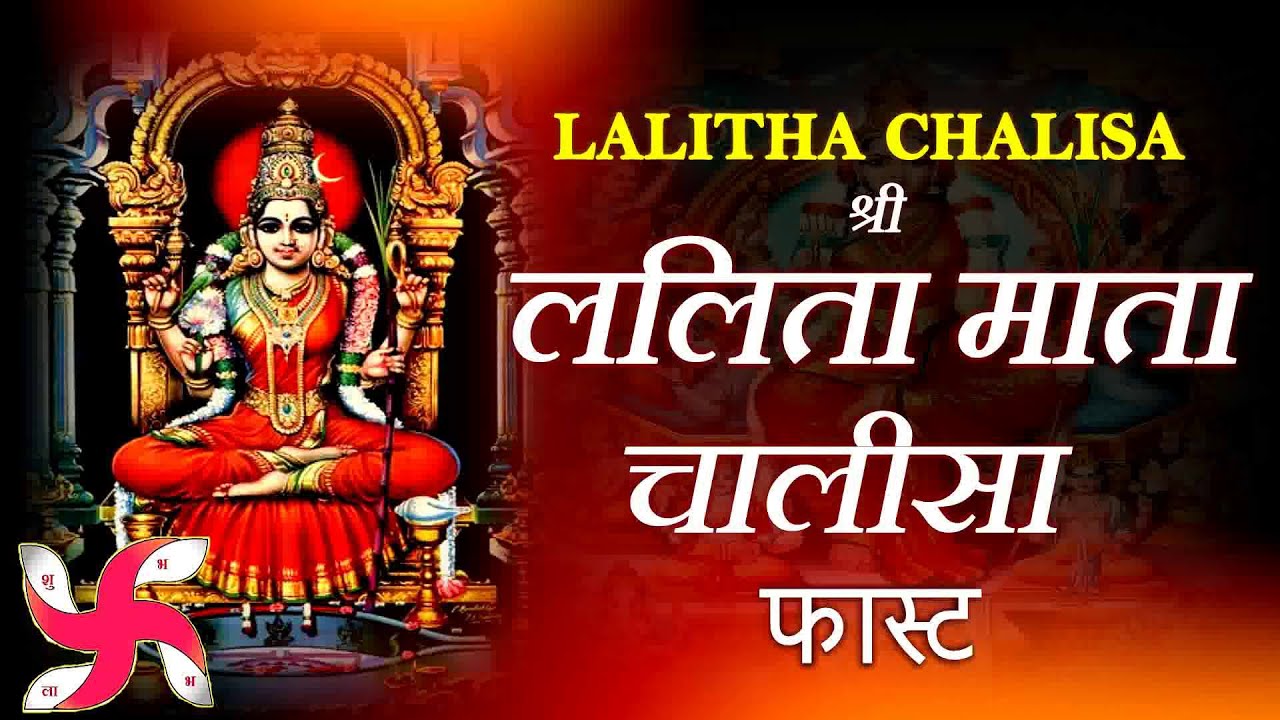
Lalita Tripurasundari herself is the supreme cosmic feminine in the Sri Vidya tradition – the most refined Tantric stream of Hindu Shaktism. The Sri Vidya tradition holds her as the supreme reality, with Lakshmi, Saraswati, Kali, Parvati all as her manifestations. Iconographically she is depicted four-armed, seated on the Pancha-brahmasana (the throne of five gods – Brahma, Vishnu, Rudra, Ishwara, Sadashiva who form the legs and seat).
The Sri Vidya tradition centres on the Sri Yantra (Lalita's geometric form – nine interlocking triangles forming 43 smaller triangles), the Pancha-dashi mantra (the 15-syllable mantra of Lalita), and the Lalita Sahasranama (the 1000 names of Lalita, from the Brahmanda Purana). The major Sri Vidya pithas are at Kanchi Kamakoti, Sringeri, Joshimath, and Dwarka.
The Chalisa's wider companions are the Durga Chalisa, Lakshmi Chalisa, Saraswati Chalisa, Kali Chalisa, and the Lalita Sahasranama.
How to recite
A simple, sustainable approach. Nothing here is a hard rule – devotion shapes the form, not the other way around.
-
Preparation
Bathe and wear clean clothes. Sit facing east. Traditional offerings: red flowers, kumkum, akshat, fruits, and (for Sri Vidya practice) a Sri Yantra placed at the altar.
-
Posture and start
Sit cross-legged with your spine straight. Bow once. If reciting on Lalita Jayanti, Lalita Panchami, or as part of daily Sri Vidya sadhana, offer a brief sankalp.
-
Recitation
Move through the chaupais without rushing. Verses 6-10 list the Dasha Mahavidyas. End the recitation with quiet meditation on the Sri Yantra or the Lalita-form.
-
After
Many people end with the Lalita bija mantra Om Aim Hreem Shreem Lalitayai Namah recited 11 or 21 times.
-
Daily practice and special days
Fridays are auspicious. Lalita Jayanti on Magh Purnima and Lalita Panchami in Sharad Navratri are the major days.