On this page
Lyrics with meaning
The complete Durga Chalisa – two opening dohas, forty chaupais, and a closing doha. A short English meaning sits below every verse. Toggle the script to read in Devanagari, romanized, or both side-by-side.
नमो नमो दुर्गे सुख करनी। नमो नमो अम्बे दुःख हरनी॥
Namo namo Durge sukh karani. Namo namo Ambe dukh harani.
Salutations, salutations to Durga, the giver of happiness. Salutations, salutations to Amba, the remover of sorrow.
निरंकार है ज्योति तुम्हारी। तिहूँ लोक फैली उजियारी॥
Niraankaar hai jyoti tumhaari. Tihuun lok phaili ujiyaari.
Your light is formless and beyond shape. It spreads across all three worlds – earth, heaven, and the netherworld – lighting them up.
शशि ललाट मुख महाविशाला। नेत्र लाल भृकुटि विकराला॥
Shashi lalaat mukh mahaa-vishaala. Netra laal bhrkuti vikaraala.
The moon shines on your forehead. Your face is vast and mighty. Your eyes are red, your eyebrows fierce – an image of power held in stillness.
रूप मातु को अधिक सुहावे। दरश करत जन अति सुख पावे॥
Roop maatu ko adhik suhaave. Darash karat jan ati sukh paave.
O Mother, your form is deeply enchanting. Anyone who has your darshan finds deep happiness.
तुम संसार शक्ति लै कीना। पालन हेतु अन्न धन दीना॥
Tum sansaar shakti lai keenaa. Paalan hetu ann dhan deenaa.
You hold within you the power that runs the world. For the sustenance of all life, you give food and wealth.
अन्नपूर्णा हुई जग पाला। तुम ही आदि सुन्दरी बाला॥
Annapoornaa hui jag paalaa. Tum hi aadi sundari baalaa.
As Annapurna, you nourish the entire world. You are also the eternal Bala Sundari – the timeless young goddess of beauty.
प्रलय काल सब नाशन हारी। तुम गौरी शिव-शंकर प्यारी॥
Pralay kaal sab naashan haari. Tum Gauri Shiv-Shankar pyaari.
At the time of cosmic dissolution, you destroy all that has run its course. You are Gauri, the beloved consort of Shiv-Shankar.
शिव योगी तुम्हरे गुण गावैं। ब्रह्मा विष्णु तुम्हें नित ध्यावें॥
Shiv yogi tumhare gun gaavain. Brahmaa Vishnu tumhein nit dhyaavain.
Shiva the yogi sings your virtues. Brahma and Vishnu meditate on you every day – the Trimurti themselves bow to you.
रूप सरस्वती को तुम धारा। दे सुबुद्धि ऋषि मुनिन उबारा॥
Roop Sarasvati ko tum dhaaraa. De subuddhi rishi munin ubaaraa.
You took the form of Saraswati. By giving wisdom and right understanding, you uplifted the rishis and sages.
धरयो रूप नरसिंह को अम्बा। प्रकट भईं फाड़ कर खम्बा॥
Dharayo roop Narsingh ko Ambaa. Prakat bhayin phaad kar khambaa.
O Amba, you took the form of Narasimha. You appeared by tearing open the pillar – the famous Puranic moment when the man-lion form emerged to protect Prahlad.
रक्षा करि प्रह्लाद बचायो। हिरण्याकुश को स्वर्ग पठायो॥
Rakshaa kari Prahlaad bachaayo. Hiranyaakush ko swarg pathaayo.
You protected and saved the boy-devotee Prahlad. You sent the demon Hiranyakashipu to his final abode – ending his tyranny.
लक्ष्मी रूप धरो जग माहीं। श्री नारायण अंग समाहीं॥
Lakshmi roop dharo jag maahin. Shri Naaraayan ang samaahin.
You took the form of Lakshmi in this world. You merge into the very form of Sri Narayana – the divine couple inseparable.
क्षीर सिन्धु में करत विलासा। दया सिन्धु दीजै मन आसा॥
Ksheer sindhu mein karat vilaasaa. Dayaa sindhu deejai man aasaa.
You dwell in joy upon the ocean of milk (with Vishnu). O ocean of compassion, please fulfill the wishes of my heart.
हिंगलाज में तुम्हीं भवानी। महिमा अमित न जात बखानी॥
Hingalaaj mein tumhin Bhavaani. Mahimaa amit na jaat bakhaani.
At Hinglaj (the Shakti Peeth in present-day Pakistan), it is you who are Bhavani. Your glory is endless – beyond what words can describe.
मातंगी अरु धूमावति माता। भुवनेश्वरी बगला सुखदाता॥
Maatangi aru Dhoomaavati maataa. Bhuvaneshvari Bagalaa sukhadaataa.
You are Matangi and Mother Dhumavati. You are Bhuvaneshwari and Bagalamukhi, the giver of happiness – four of the Dasha Mahavidyas, ten faces of the goddess.
श्री भैरव तारा जग तारिणी। छिन्न भाल भव दुख निवारिणी॥
Shri Bhairav Taaraa jag taarini. Chhinna bhaal bhav dukh nivaarini.
With Shri Bhairava, you are Tara who carries the world across. As Chhinnamasta, you remove the sufferings of worldly existence – three more of the Mahavidyas named here.
केहरि वाहन सोह भवानी। लांगुर वीर चलत अगवानी॥
Kehari vaahan soh Bhavaani. Laangur veer chalat agavaani.
Bhavani, riding her lion, looks majestic. The brave Langur (Hanuman) walks ahead leading the way – Hanuman as the goddess's standard-bearer.
कर में खप्पर खड्ग विराजै। जाको देख काल डर भाजै॥
Kar mein khappar khadg viraajai. Jaako dekh kaal dar bhaajai.
In your hands the skull-bowl and the sword shine. Seeing them, even Kaal (death himself) flees in fear.
सोहै अस्त्र और त्रिशूला। जाते उठत शत्रु हिय शूला॥
Sohai astra aur trishoolaa. Jaate uthat shatru hiy shoolaa.
Your other weapons and the trident shine. Just at the sight of them, fear pierces the hearts of enemies.
नगरकोट में तुम्हीं विराजत। तिहुँलोक में डंका बाजत॥
Nagarkot mein tumhin viraajat. Tihu lok mein dankaa baajat.
At Nagarkot (Kangra Mata's ancient temple in Himachal), it is you who reside. Your fame resounds across all three worlds.
शुम्भ निशुम्भ दानव तुम मारे। रक्तबीज शंखन संहारे॥
Shumbh Nishumbh daanav tum maare. Raktabeej shankhan sanhaare.
You slew the demons Shumbha and Nishumbha. You destroyed Raktabija and others – the great battle of the Devi Mahatmya.
महिषासुर नृप अति अभिमानी। जेहि अघ भार मही अकुलानी॥
Mahishaasur nrip ati abhimaani. Jehi agh bhaar mahi akulaani.
King Mahishasura was filled with arrogance. The earth itself groaned under the weight of his sins.
रूप कराल कालिका धारा। सेन सहित तुम तिहि संहारा॥
Roop karaal Kaalikaa dhaaraa. Sen sahit tum tihi sanhaaraa.
You took the fierce form of Kalika. With his entire army, you destroyed him – the moment Mahishasura was slain.
परी भीर सन्तन पर जब जब। भई सहाय मातु तुम तब तब॥
Pari bheer santan par jab jab. Bhayi sahaay maatu tum tab tab.
Whenever great trouble has come upon the saints and devotees – every single time, O Mother, you have come to their aid.
अमरपुरी अरु बासव लोका। तब महिमा सब रहें अशोका॥
Amarpuri aru Baasav lokaa. Tab mahimaa sab rahein ashokaa.
Through your glory, the realm of the immortals and the world of Indra (Basava-loka) all remain free from sorrow.
ज्वाला में है ज्योति तुम्हारी। तुम्हें सदा पूजें नर नारी॥
Jwaalaa mein hai jyoti tumhaari. Tumhein sadaa poojein nar naari.
At Jwalaji (the eternal flames in Himachal Pradesh), your light burns. Men and women always come to worship you there.
प्रेम भक्ति से जो यश गावे। दुख दारिद्र निकट नहिं आवे॥
Prem bhakti se jo yash gaave. Dukh daaridr nikat nahin aave.
Whoever sings your glory with love and devotion – sorrow and poverty do not come near them.
ध्यावे तुम्हें जो नर मन लाई। जन्म-मरण ताको छुटि जाई॥
Dhyaave tumhein jo nar man laai. Janma-maran taako chhuti jaai.
Whoever meditates on you with focused mind – the cycle of birth and death is released for them.
जोगी सुर मुनि कहत पुकारी। योग न हो बिन शक्ति तुम्हारी॥
Jogi sur muni kahat pukaari. Yog na ho bin shakti tumhaari.
Yogis, gods, and sages all openly declare – no yoga can succeed without your shakti, your power.
शंकर आचारज तप कीनो। काम अरु क्रोध जीति सब लीनो॥
Shankar aachaaraj tap keeno. Kaam aru krodh jeeti sab leeno.
Lord Shankar himself did intense penance. He won over desire and anger completely.
निशिदिन ध्यान धरो शंकर को। काहु काल नहीं सुमिरो तुमको॥
Nishidin dhyaan dharo Shankar ko. Kaahu kaal nahin sumiro tumko.
Day and night he held meditation on Shiva. But for some time, he did not remember you, O Shakti.
शक्ति रूप को मरम न पायो। शक्ति गई तब मन पछितायो॥
Shakti roop ko maram na paayo. Shakti gayi tab man pachhitaayo.
He did not grasp the secret of your form. When his shakti left him, he repented deeply – the verse teaches that even the highest yogi needs Devi-shakti.
शरणागत हुई कीर्ति बखानी। जय जय जय जगदम्ब भवानी॥
Sharanaagat huyi keerti bakhaani. Jai jai jai Jagadamb Bhavaani.
He surrendered to you and sang your fame. Hail, hail, hail to Jagadamba Bhavani – the Mother of the worlds.
भई प्रसन्न आदि जगदम्बा। दई शक्ति नहीं कीन विलम्बा॥
Bhayi prasanna aadi Jagadambaa. Dayi shakti nahin keen vilambaa.
The eternal Jagadamba was pleased. Without delay, she gave back the shakti.
मोको मातु कष्ट अति घेरो। तुम बिन कौन हरै दुख मेरो॥
Moko maatu kasht ati ghero. Tum bin kaun harai dukh mero.
O Mother, troubles surround me. Who else but you can remove my suffering?
आशा तृष्णा निपट सतावैं। मोह मदादिक सब विनशावैं॥
Aashaa trshnaa nipat sataavain. Moh madaadik sab vinashaavain.
Cravings and longings constantly torment me. Please destroy attachment, pride, and all such inner enemies.
शत्रु नाश कीजै महारानी। सुमिरौं इकचित तुम्हें भवानी॥
Shatru naash keejai Mahaaraani. Sumiraun ikchit tumhein Bhavaani.
O great Queen, please destroy my enemies (within and without). I remember you with one-pointed mind, O Bhavani.
करो कृपा हे मातु दयाला। ऋद्धि सिद्धि दे करहु निहाला॥
Karo kripaa he maatu dayaalaa. Rddhi siddhi de karahu nihaalaa.
Show your grace, O compassionate Mother. Bestow riddhi and siddhi (prosperity and spiritual attainments) and bless me with fulfillment.
जब लगि जिऊँ दया फल पाऊँ। तुम्हरो यश मैं सदा सुनाऊँ॥
Jab lagi jiun dayaa phal paaun. Tumharo yash main sadaa sunaaun.
As long as I live, may I receive the fruit of your compassion. May I always sing your glory to others.
दुर्गा चालीसा जो नित गावै। सब सुख भोग परम पद पावै॥
Durgaa Chaaliisaa jo nit gaavai. Sab sukh bhog param pad paavai.
Whoever sings the Durga Chalisa daily – they enjoy all worldly joys and finally reach the supreme state.
देवीदास शरण निज जानी। करहु कृपा जगदम्ब भवानी॥
Devidaas sharan nij jaani. Karahu kripaa Jagadamb Bhavaani.
Knowing that Devidas has taken your refuge – please show grace, O Mother of the world, Bhavani. The composer signs his name in this closing line.
Why this chalisa
What the Durga Chalisa is recited for, and what people turn to it for.
Inner courage and steadiness
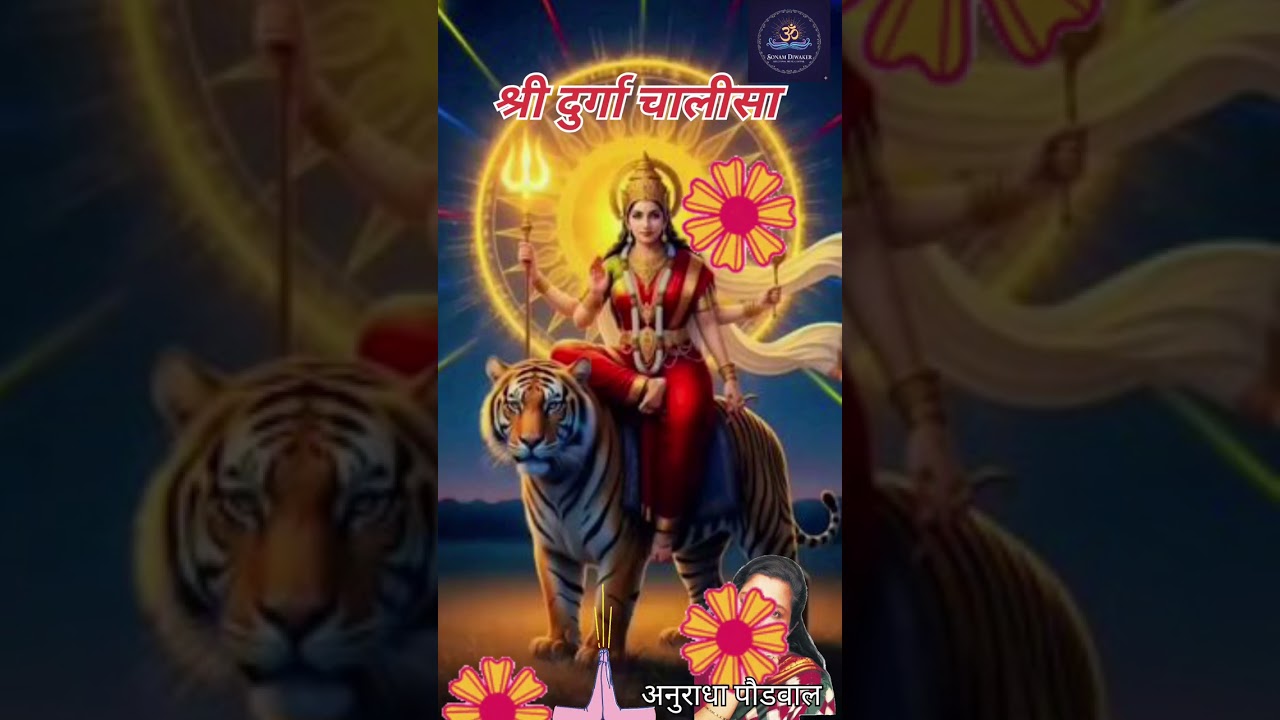
Chaupais 17-19 describe the goddess on her lion with sword, trident, and skull-bowl in hand – the imagery devotees turn to when fear or threat is felt. The Chalisa works less as an outside charm and more as a steady reminder that the same fierce protective shakti sits within the worshipper.
Protection from harmful influences
Chaupai 18 – "in your hand the sword shines, seeing it even Kaal (death) flees" – is the verse traditionally turned to in times of perceived threat or harmful energy. The Chalisa is recited at night, before journeys, when entering new homes, and during periods of illness.
Navratri practice
Both Navratris – Chaitra in spring and Sharad in autumn – are the high seasons of Devi worship. Many devotees commit to 11, 21, 41, or 108 paaths over the nine nights, alongside the Durga Saptashati for those with deeper practice.
Eases hard periods
Tuesdays and Fridays are offered to Devi, and many recite the Chalisa daily through difficult life phases – exams, court cases, long illness, periods of Shani sade sati. The teaching is not that the Chalisa cancels difficulty but that taking shelter in the Mother gives the inner steadiness to walk through it.
Daily anchor
At seven minutes a day, the Chalisa is short enough to keep up over years. The goddess in her many forms – Annapurna, Saraswati, Lakshmi, Kalika – is held as one in the Chalisa, so one daily paath touches the whole spectrum of household and inner life.
Path to deeper Devi-bhakti
The Chalisa is the entry door. Once the practice settles, devotees often add the Argala Stotra, Siddha Kunjika Stotra, and the longer Durga Saptashati chapters during Navratri.
Origin
The Durga Chalisa was composed by Devidas, a saint-poet whose name appears as a signature in the closing line: "Devidas sharan nij jani, karahu kripa Jagdamb Bhavani". Beyond this textual signature, very little is known about Devidas with certainty. The text itself does not record a date, unlike the Shiv Chalisa which carries an explicit Vikram Samvat year. Most scholars place the Durga Chalisa's composition in the 18th-19th century, in the broader Bhakti tradition of north India, but this is approximate.
Some textual scholars have suggested that "Devidas" – meaning "servant of the Devi" – may be a pen-name rather than the composer's given name. This convention was common in Bhakti literature, where poets often signed with a name that expressed their devotional relationship to a deity. Either way, what reaches us is the Chalisa itself: forty verses in simple Hindi (with some Awadhi influence) that move through the goddess's many forms and her great deeds.
Goddess Durga is the warrior form of the divine mother in Hindu tradition. The Devi Mahatmya (also called Durga Saptashati) – a text of 700 verses from the Markandeya Purana – tells her central stories: the slaying of Mahishasura the buffalo-demon (Chaupai 22-23), the destruction of Shumbha and Nishumbha (Chaupai 21), and the killing of Raktabija whose every drop of blood became another demon (Chaupai 21). The Chalisa's middle verses summarise these stories, while the opening verses establish her as Annapurna who feeds, Saraswati who teaches, and Lakshmi who blesses – all the goddesses are her.
The Chalisa's wider companions are the Durga Saptashati (the 700-verse Devi Mahatmya, recited especially during Navratri), the Argala Stotra (offered alongside the Saptashati for protection and fulfillment), and the Siddha Kunjika Stotra (a tantric stotra said to unlock the merit of the full Saptashati). The Chalisa is the daily companion that everyone learns first.
How to recite
A simple, sustainable approach. Nothing here is a hard rule – devotion shapes the form, not the other way around.
-
Preparation
Bathe and wear clean clothes if you can. Sit in a clean space facing east or north-east, or facing your home altar if you have one. A small diya, red flowers, sindoor (vermilion), and sweets are the traditional offerings if you have them – but none of this is strictly required. Many devotees keep a small image or yantra of Durga at their place of worship; the Chalisa works equally well without.
-
Posture and start
Sit cross-legged on the floor on a mat, or in a chair, with your spine comfortably straight. Bow once toward the image. Take a moment of silence to settle the mind. Some traditions begin with the Sanskrit invocation 'Ya Devi sarva-bhuteshu...' before starting Chaupai 1 – this is optional and not part of the original Chalisa. Begin with the first chaupai (Namo namo Durge sukh karani), slowly and clearly.
-
Recitation
Move through the forty chaupais without rushing. Saying it aloud has its own merit because the sound itself is an offering, but silent reciting works just as well in offices and during travel. The full recitation takes about seven minutes spoken at a comfortable pace. End with the closing line of Devidas. Devotion matters more than perfect pronunciation.
-
After
Sit quietly for a moment with eyes closed. Many people end with the bija mantra 'Aim Hreem Kleem Chamundayai Vichche' nine times, or simply 'Jai Mata Di'. If you have a wish or difficulty in mind, mentally offer the punya of the recitation toward it before getting up. Some traditions add a closing line of namaskar to one's own guru and family deity (kuldevta).
-
Daily practice and Navratri
One paath a day – morning or evening – is enough for steady daily practice. Tuesdays and Fridays are especially auspicious. Both Navratris (Chaitra around March-April, and Sharad around September-October) are the most powerful seasons for Durga worship. Many devotees commit to 11, 21, 41, or 108 paaths across the nine nights, alongside lighting an akhand jyot (continuous flame). For specific situations, an anushthan of 41 paaths over 41 days, or 108 paaths over a Tuesday-to-Tuesday period, is the older tradition.