On this page
Lyrics with meaning
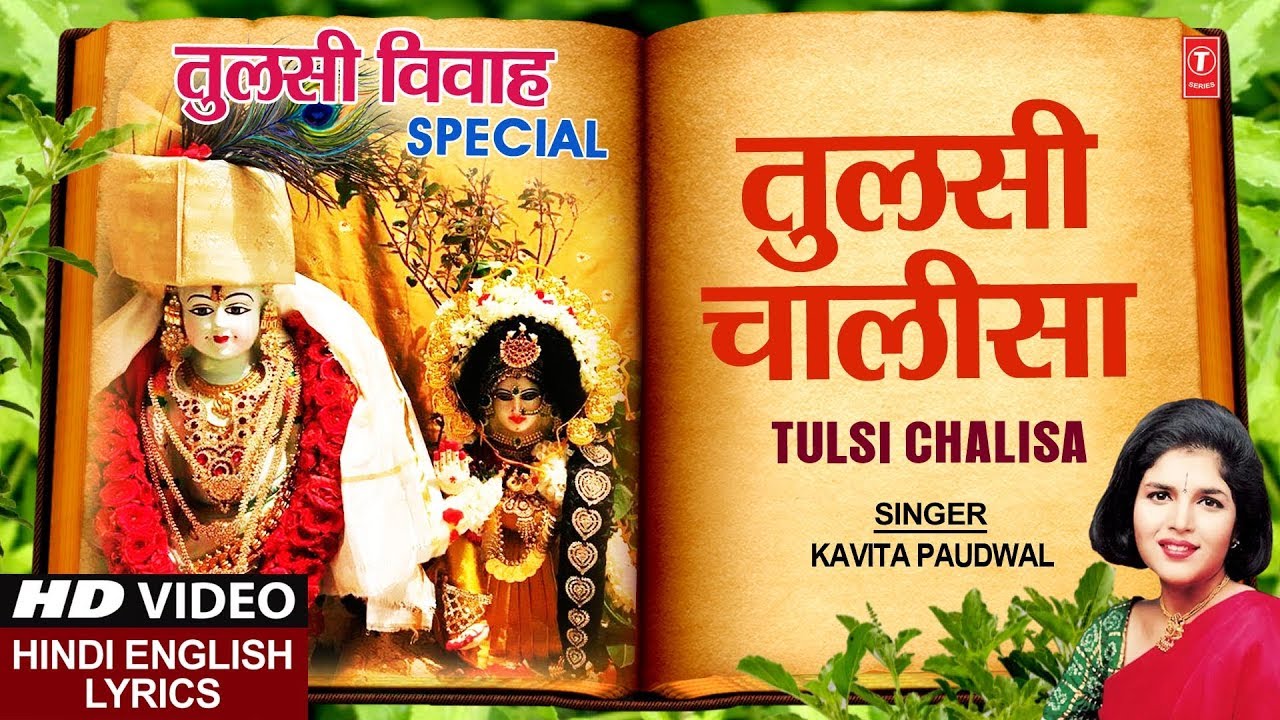
The complete Tulsi Chalisa – two opening dohas, forty chaupais, and a closing doha. A short English meaning sits below every verse. Toggle the script to read in Devanagari, romanized, or both side-by-side.
श्री तुलसी महारानी, करूँ विनय सिरनाय। जो मम हो संकट विकट, दीजै मात नशाय॥
Shri Tulsi Maharani, karun vinay sirnay. Jo mam ho sankat vikat, dijai mat nashay.
Shri Tulsi Maharani, I bow my head in prayer to you. Whatever great calamity is upon me, Mother, please destroy it.
नमो नमो तुलसी महारानी। महिमा अमित न जाय बखानी॥
Namo namo Tulsi Maharani. Mahima amit na jaay bakhani.
Salutations again and again to Tulsi Maharani. Your infinite glory cannot be described.
दियो विष्णु तुमको सनमाना। जग में छायो सुयश महाना॥
Diyo Vishnu tumko sanmana. Jag mein chhayo suyash mahana.
Vishnu has given you supreme honour. Your great fame has spread across the world.
विष्णुप्रिया जय जयति भवानि। तिहूं लोक की हो सुखखानी॥
Vishnupriya jai jayati bhavani. Tihun lok ki ho sukh-khani.
Vishnupriya (beloved of Vishnu), hail and victory to you, Bhavani. You are the treasury of joy in all three worlds.
भगवत पूजा कर जो कोई। बिना तुम्हारे सफल न होई॥
Bhagvat puja kar jo koi. Bina tumhare safal na hoi.
Whoever performs the worship of the Lord. Without you, that worship is not complete.
जिन घर तव नहिं होय निवासा। उस पर करहिं विष्णु नहिं बासा॥
Jin ghar tav nahin hoy nivasa. Us par karahin Vishnu nahin basa.
In whichever home you do not reside. There Vishnu does not dwell.
तव दर्शन ते पाप नशावे। प्रभु पद-पंकज भक्ति बढ़ावे॥
Tav darshan te paap nashave. Prabhu pad-pankaj bhakti badhave.
By your darshan, sins are destroyed. Devotion to the Lord's lotus feet increases.
करे सदा जो तव नित सुमिरन। तेहिके काज होय सब पूरन॥
Kare sada jo tav nit sumiran. Tehike kaaj hoy sab puran.
Whoever constantly remembers you. All their work is fully accomplished.
कातिक मास महात्म तुम्हारा। ताको जानत सब संसारा॥
Kartik mas mahatm tumhara. Tako janat sab sansara.
The greatness of the month of Kartik is yours. The whole world knows this. (Kartik – October-November – is the Tulsi-dedicated month.)
तव पूजन जो करैं कुंवारी। पावै सुन्दर वर सुकुमारी॥
Tav pujan jo karain kunwari. Pavai sundar var sukumari.
Whoever, being unmarried, worships you. The young woman receives a handsome groom.
कर जो पूजा नितप्रति नारी। सुख सम्पत्ति से होय सुखारी॥
Kar jo puja nitprati nari. Sukh sampatti se hoy sukhari.
The married woman who performs your daily worship. Becomes joyful with happiness and prosperity.
वृद्धा नारी करै जो पूजन। मिले भक्ति होवै पुलकित मन॥
Vridhha nari karai jo pujan. Mile bhakti hovai pulkit man.
The elderly woman who performs your worship. Receives devotion, the heart fills with joy.
पुत्र चाहहिं जो पुत्र पावहीं। तव सुमिरत सब कारज पावहीं॥
Putra chahahin jo putra pavahin. Tav sumirat sab karaj pavahin.
Those who desire a son receive a son. Through your remembrance, all desired ends are attained.
श्रद्धा से पूजै जो कोई। भवनिधि से तर जावै सोई॥
Shraddha se pujai jo koi. Bhav-nidhi se tar javai soi.
Whoever worships you with faith. Crosses the ocean of worldly existence.
कथा भागवत यज्ञ करावै। तुम बिन नहीं सफलता पावै॥
Katha Bhagvat yagya karavai. Tum bin nahin safalata pavai.
Whoever holds a Bhagavat katha or yagna. Without you, they cannot find success. (No Vaishnava ritual is complete without tulsi leaves as the central offering.)
जग में तुम सम और न दूजा। तव बिनु निष्फल देव की पूजा॥
Jag mein tum sam aur na duja. Tav binu nishphal dev ki puja.
In the world, there is no other equal to you. Without you, even the worship of the gods is fruitless.
तुम्हीं मात यंत्रन तंत्रन में। सकल काज सिधि होवै क्षण में॥
Tumhin mat yantran tantran mein. Sakal kaaj sidhi hovai kshan mein.
You, Mother, are in every yantra and tantra. Every work is accomplished in a moment.
औषधिरूप आप हो माता। सब जग में तव यश विख्याता॥
Aushadhi-roop aap ho mata. Sab jag mein tav yash vikhyata.
You are the form of medicine, Mother. Your fame is renowned across all the world. (Tulsi has been used in Ayurveda for thousands of years.)
देव रिषी मुनि औ तपधारी। करत सदा तव जय जयकारी॥
Dev rishi muni au tap-dhari. Karat sada tav jai jaikari.
Gods, sages, munis, and ascetics. Always sing your hail and victory.
वेद पुरानन तव यश गाया। महिमा अगम पार नहिं पाया॥
Ved Puranan tav yash gaya. Mahima agam paar nahin paya.
The Vedas and Puranas have sung your fame. Yet your unfathomable glory has no limit.
नमो नमो जै जै सुखकारनि। नमो नमो जै दुखनिवारनि॥
Namo namo jai jai sukh-karani. Namo namo jai dukh-nivarani.
Salutations, hail, hail, giver of joy. Salutations, hail, destroyer of sorrow.
नमो नमो सुखसम्मति देनी। नमो नमो अघ काटन छेनी॥
Namo namo sukh-sammati deni. Namo namo agh katan chheni.
Salutations, giver of happy good intellect. Salutations, the chisel that cuts through sin.
नमो नमो भक्तन दुःख हरनी। नमो नमो दुष्टन मद छेनी॥
Namo namo bhaktan dukh harani. Namo namo dushtan mad chheni.
Salutations, lifter of devotees' sorrow. Salutations, breaker of the pride of the wicked.
नमो नमो भव पार उतारनि। नमो नमो परलोक सुधारनि॥
Namo namo bhav paar utarani. Namo namo parlok sudharani.
Salutations, ferry across the worldly ocean. Salutations, improver of the next world.
नमो नमो निज भक्त उबारनि। नमो नमो जन काज संवारे॥
Namo namo nij bhakt ubarani. Namo namo jan kaaj sanware.
Salutations, uplifter of your own devotees. Salutations, accomplisher of devotees' work.
नमो नमो जय कुमति नशावनि। नमो नमो सब सुख उपजावनि॥
Namo namo jai kumati nashavani. Namo namo sab sukh upjavani.
Salutations, hail, destroyer of bad intellect. Salutations, generator of every happiness.
जयति जयति जय तुलसी माता। ध्याऊँ तुमको शीश नवाई॥
Jayati jayati jai Tulsi mata. Dhyaun tumko shish navai.
Hail, hail, hail Tulsi Mata. Bowing my head, I meditate upon you.
निजजन जानि मोहि अपनाओ। बिगड़े कारज आप बनाओ॥
Nij-jan jani mohi apnao. Bigde karaj aap banao.
Knowing me as your own, accept me. Set right the works that have gone wrong.
करूँ विनय मैं मात तुम्हारी। पूरण आशा करहु हमारी॥
Karun vinay main mat tumhari. Puran asha karahu hamari.
I make this prayer to you, Mother. Fulfil our hopes.
शरण चरण कर जोरि मनाऊँ। निशदिन तेरे ही गुण गाऊँ॥
Sharan charan kar jori manaun. Nishdin tere hi gun gaaun.
I take shelter at your feet, hands folded, pleading. Day and night I sing only your virtues.
करहु मात यह अब मोपर दाया। निर्मल होय सकल मम काया॥
Karahu mat yah ab mopar daya. Nirmal hoy sakal mam kaya.
Mother, show me your grace now. May my entire body become pure.
मांगू मात यह बर दीजै। सकल मनोरथ पूर्ण कीजै॥
Mangu mat yah var dijai. Sakal manorath puran kijai.
I beg, Mother, grant me this boon. Fulfil all my heart's wishes.
जानू नहीं कुछ नेम अचारा। छमहु मात अपराध हमारा॥
Janu nahin kuchh nem achara. Chhamahu mat aparadh hamara.
I do not know the proper rules and rituals. Forgive my faults, Mother.
बारह मास करै जो पूजा। ता सम जग में और न दूजा॥
Barah mas karai jo puja. Ta sam jag mein aur na duja.
Whoever performs your worship through all twelve months. There is no other equal to them in the world.
प्रथमहि गंगाजल मंगवावे। फिर सुन्दर स्नान करावे॥
Prathamahi Gangajal mangavave. Phir sundar snan karave.
First, bring Ganga jal. Then perform a beautiful bath of the tulsi.
चन्दन अक्षत पुष्प चढ़ावे। धूप दीप नैवेद्य लगावे॥
Chandan akshat pushp chadhave. Dhoop deep naivedya lagave.
Offer sandalwood paste, akshat, and flowers. Apply incense, lamp, and food offering.
करे आचमन गंगा जल से। ध्यान करे हृदय निर्मल से॥
Kare achaman Ganga jal se. Dhyan kare hriday nirmal se.
Take achaman with Ganga jal. Meditate with a pure heart.
पाठ करे फिर चालीसा की। अस्तुति करे मात तुलसा की॥
Paath kare phir Chalisa ki. Astuti kare mat Tulsa ki.
Then recite the Chalisa. Sing the praise of Mother Tulsa.
यह विधि पूजा करे हमेशा। ताके तन नहिं रहै क्लेशा॥
Yah vidhi puja kare hamesha. Take tan nahin rahai klesha.
Whoever always performs the worship by this method. No suffering remains in their body.
करै मास कार्तिक का साधन। सोवे नित पवित्र सिध हुई जाहीं॥
Karai mas Kartik ka sadhan. Sove nit pavitra sidh hui jahin.
Whoever performs the Kartik-month sadhana. Sleeps each day pure, attains siddhi.
है यह कथा महासुखदाई। पढ़ै सुने सो भव तर जाई॥
Hai yah katha maha-sukh-dai. Padhai sune so bhav tar jai.
This story is the great giver of happiness. Whoever reads or hears it crosses the worldly ocean.
यह श्री तुलसी चालीसा, पाठ करे जो कोय। गोविन्द सो फल पावही, जो मन इच्छा होय॥
Yah Shri Tulsi Chalisa, paath kare jo koy. Govind so phal pavahi, jo man iccha hoy.
This Shri Tulsi Chalisa, whoever recites it. Receives from Govind (Krishna) the fruit their heart desires.
Why this chalisa
What the Tulsi Chalisa is recited for, and what people turn to it for.
Daily anchor for the household tulsi worship
Almost every traditional Hindu home keeps a tulsi pot in the courtyard, balcony, or kitchen-window. The Chalisa is the daily prayer offered alongside watering the plant – many homes recite it morning and evening with a small ghee diya at the base of the pot.
Centrepiece of Kartik month worship
Verse 8 directly names the Kartik mas mahatm. Many homes recite the Chalisa daily through Kartik (October-November), often pairing it with the Vishnu Sahasranamam, the Damodar Ashtakam, and a small ghee diya at the tulsi pot at sunset every evening.
Tulsi Vivah and Devuthani Ekadashi
Tulsi Vivah on Kartik Shukla Dvadashi marks the symbolic marriage of Tulsi to Vishnu in his Shaligram form. Many households perform a small wedding ceremony at the tulsi pot, with the Chalisa as the central recitation. Devuthani Ekadashi – the day Vishnu wakes from his four-month sleep – is the related celebration.
Companion to Vishnu and Krishna worship
Verses 2-5 establish that no Vishnu worship is complete without tulsi. A tulsi leaf is the most-prized offering to Krishna – simpler than gold, dearer than gems. Many homes recite the Chalisa alongside the Vishnu Chalisa on Thursdays and the Krishna Chalisa on Janmashtami and Ekadashi.
Help during illness and household difficulty
Verse 17 directly names Tulsi as the aushadhi-roop – the form of medicine. Tulsi has been used in Ayurveda for thousands of years for fever, cough, and respiratory illness. Many households consume a few tulsi leaves daily with their morning chai or warm water. (This is a verse of devotional faith and traditional Ayurvedic practice, not a replacement for medical care.)
For matters of marriage and household harmony
Verses 9-12 directly name four classes of household women – the unmarried girl seeking a husband, the married woman seeking happiness, the elderly woman seeking devotion, and the childless seeking children. Many families undertake a Tulsi Vivah ceremony for marriage delays in the family, with the Chalisa as the central recitation. Pair with the Lakshmi Chalisa for household prosperity.
Origin
The Tulsi Chalisa carries no clear signature line. Many published copies attribute it simply to "tradition" – an honesty worth preserving. The text is generally placed in the 18th-19th century CE by language and style, written in simple Hindi accessible to households across north India. The Chalisa's structure is unusual in containing a long stretch of namo namo repetition (verses 20-25) – a feature drawn from the older Sanskrit stuti tradition.
Tulsi herself is the goddess of the sacred basil plant, worshipped as Vishnupriya – the beloved of Vishnu. The classical legend (preserved in the Padma Purana and the Brahmavaivarta Purana) tells of Vrinda, a chaste woman whose devotion to her husband Jalandhara made him unconquerable. Vishnu took Jalandhara's form to break Vrinda's chastity (so that Shiva could slay Jalandhara), and afterwards Vrinda cursed Vishnu to become a stone. Vishnu accepted this curse and became the Shaligram, while Vrinda was reborn as the tulsi plant – eternally married to Vishnu through the Tulsi-Shaligram Vivah. (This story is also referenced in the Vishnu Chalisa verses 21-26.)
Tulsi is also Krishna's most-beloved offering. In the Krishna Tulabharam tradition, when Satyabhama could not balance Krishna on a scale of gold, a single tulsi leaf placed by Rukmini tipped the scale – establishing that tulsi (with bhakti) outweighs all material wealth. This story is the foundation of the daily household practice of offering a single tulsi leaf at the Krishna or Vishnu murti before any meal or aarti.
The Chalisa's wider companions are the Vishnu Chalisa (her consort), the Krishna Chalisa (Krishna's most-loved offering), the Lakshmi Chalisa (the wider Vaishnavi consort), and the Radha Chalisa (paired in Vrindavan worship – Tulsi was a sakhi of Radha in the Vrindavan tradition).
How to recite
A simple, sustainable approach. Nothing here is a hard rule – devotion shapes the form, not the other way around.
-
Preparation
If you have a tulsi pot at home, water it first and place a small ghee diya at the base. Bathe and wear clean clothes. Sit facing east, near the tulsi pot if possible, otherwise at the home altar with a small picture of Tulsi-Vishnu or Tulsi-Krishna. The traditional offerings are Ganga jal, akshat, sandalwood paste, white or pink flowers, a small piece of gud (jaggery), and incense. None of this is strictly required.
-
Posture and start
Sit cross-legged on a mat, with your spine comfortably straight. Bow once at the tulsi pot. Take a moment of silence. If reciting on a Tulsi Vivah day, on Devuthani Ekadashi, in Kartik month, or for a specific intention (illness, marriage delay, household difficulty), offer a brief sankalp. Begin with the opening doha (Shri Tulsi Maharani...) slowly. Saying it aloud has merit, but silent reciting works just as well.
-
Recitation
Move through the forty chaupais without rushing. Verses 2-7 establish Tulsi's relationship with Vishnu. Verses 9-12 name the four classes of household worshippers (unmarried, married, elderly, childless). Verses 17 and the Ayurvedic medicine reference is often slowed down. Verses 20-25 are the namo namo sequence – read with a steady, prayerful rhythm. End with the closing doha. The full recitation takes about seven minutes.
-
After
Sit quietly with eyes closed for a moment. Many people end with the bija mantra Om Tulasyai Namah recited 11 or 21 times. Take a single tulsi leaf from the pot (with respect – never pluck on Sundays, Tuesdays, eclipse days, or after sunset, traditional practice says) and place it on the home altar. Offer the gud as bhog and take a small portion as prasad.
-
Daily practice and special days
One paath a day – morning – is enough for steady daily practice. Thursdays are especially auspicious. The entire month of Kartik (October-November) is the major recitation period, with daily paath and a sunset ghee diya at the tulsi pot. Tulsi Vivah on Kartik Shukla Dvadashi is the major festival. Devuthani Ekadashi, Kartik Purnima, every Ekadashi, and Margashirsha Guruvar Thursdays are other major recitation days.