On this page
Lyrics with meaning
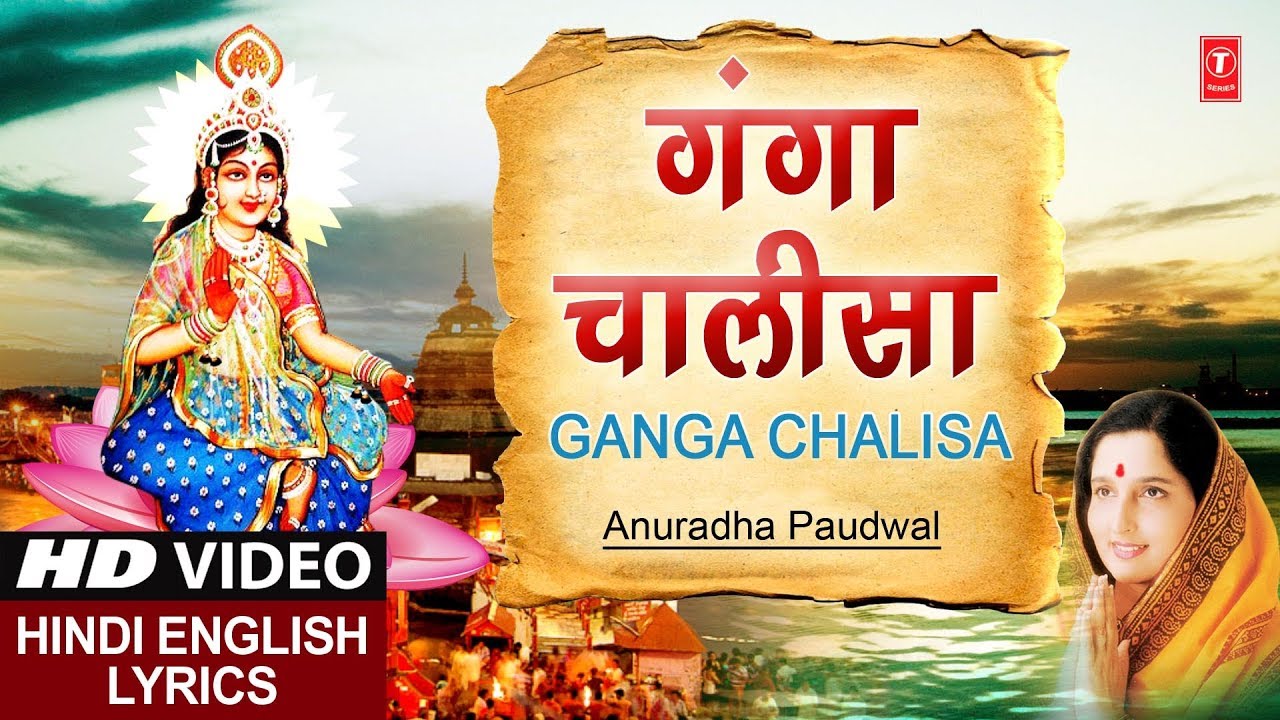
The complete Ganga Chalisa – two opening dohas, forty chaupais, and a closing doha. A short English meaning sits below every verse. Toggle the script to read in Devanagari, romanized, or both side-by-side.
जय जय जय जग पावनी, जयति देवसरि गंग। जय शिव जटा निवासिनी, अनुपम तुंग तरंग॥
Jai jai jai jag pavani, jayati Devsari Ganga. Jai Shiv jata nivasini, anupam tung taranga.
Hail, hail, hail, purifier of the world – hail to Devsari Ganga. Hail to the dweller in Shiva's matted locks, of incomparable, towering waves.
जय जग जननि हरण अघ खानी। आनन्द करनि गंग महारानी॥
Jai jag janani haran agh khani. Anand karani Ganga Maharani.
Hail, mother of the world, destroyer of the storehouse of sin. Giver of joy, great queen Ganga.
जय भागीरथि सुरसरि माता। कलिमल मूल दलनि विख्याता॥
Jai Bhagirathi Surasari mata. Kalimal mool dalani vikhyata.
Hail, Bhagirathi, Mother of the heavenly river. Famous as the destroyer of the root of Kali Yuga's impurities.
जय जय जय हनु सुता अघ हननी। भीषम की माता जग जननी॥
Jai jai jai Hanu-suta agh hanani. Bhishma ki mata jag janani.
Hail, hail, hail to the daughter of Jahnu, slayer of sin. Mother of Bhishma, mother of the world. (Jahnu drank Ganga's waters and released her again, hence she is also called Jahnavi.)
धवल कमल दल मम तनु साजे। लखि शत शरद चन्द्र छवि लाजे॥
Dhaval kamal dal mam tanu saje. Lakhi shat sharad chandra chhavi laje.
White-lotus-petalled, your form is adorned. Seeing it, even a hundred autumn moons feel ashamed.
वाहन मकर विमल शुचि सोहै। अमिय कलश कर लखि मन मोहै॥
Vahan makar vimal shuchi sohai. Amiy kalash kar lakhi man mohai.
Your vehicle is the makara, pure and bright. Holding a pot of nectar, seeing it captivates the heart.
जड़ित रत्न कंचन आभूषण। हिय मणि हार, हरणि तम दूषण॥
Jadit ratna kanchan abhushan. Hiy mani haar, harani tam dushan.
Studded with jewels and gold ornaments. A gem garland on your chest, destroyer of the darkness of fault.
जग पावनि त्रय ताप नसावनि। तरल तरंग तंग मन भावनि॥
Jag pavani tray tap nasavani. Taral taranga tung man bhavani.
Purifier of the world, destroyer of the three afflictions. Your liquid, towering waves please the heart.
जो गणपति अति पूज्य प्रधाना। तिहुँ ते प्रथम गंग अस्नाना॥
Jo Ganpati ati pujya pradhana. Tihun te pratham Ganga asnana.
Even Ganpati, the most revered first deity. Bathes first in the Ganga before all worship.
ब्रह्म कमण्डल वासिनी देवी। श्री प्रभु पद पंकज सुख सेवी॥
Brahm kamandal vasini devi. Shri Prabhu pad pankaj sukh sevi.
Devi who dwells in Brahma's kamandalu (water-pot). Joyful server of the lotus feet of the Lord.
साठि सहस्र सगर सुत तारयो। गंगा सागर तीरथ धारयो॥
Sathi sahasra Sagar sut taaryo. Ganga Sagar tirath dharyo.
You liberated the sixty thousand sons of King Sagar. You bear the Ganga-Sagar tirtha. (The classical episode that explains Ganga's descent to earth.)
अगम तरंग उठयो मन भावन। लखि तीरथ हरिद्वार सुहावन॥
Agam taranga uthyo man bhavan. Lakhi tirath Haridwar suhavan.
Your unfathomable waves rise and please the heart. Behold the lovely tirtha of Haridwar.
तीरथ राज प्रयाग अक्षैवट। धरयौ मातु पुनि काशी करवट॥
Tirath raj Prayag akshaivat. Dharyau mat puni Kashi karvat.
The king of tirthas, Prayag, with the Akshayavat tree. Then mother turned toward Kashi.
धनि धनि सुरसिर स्वर्ग की सीढ़ी। तारणि अमित पितृ पद पीढ़ी॥
Dhani dhani sursari swarg ki seedhi. Tarani amit pitra pad peedhi.
Blessed, blessed Suarsari (the heavenly river), the ladder to heaven. Liberator of countless generations of ancestors.
भागीरथ तप कियो अपारा। दियो ब्रह्म तब सुरसरि धारा॥
Bhagirath tap kiyo apara. Diyo Brahma tab sursari dhara.
Bhagiratha performed unfathomable tapasya. Then Brahma granted the flow of the heavenly river.
जब जग जननी चल्यो लहराई। शंभु जटा महँ रह्यो समाई॥
Jab jag janani chalyo lehrai. Shambhu jata mahan rahyo samai.
When mother of the world flowed forth in great waves. She was contained within Shambhu's (Shiva's) matted locks.
वर्ष पर्यन्त गंग महारानी। रहीं शंभु के जटा भुलानी॥
Varsh paryant Ganga Maharani. Rahin Shambhu ke jata bhulani.
For an entire year, Queen Ganga. Remained lost in Shambhu's locks.
मुनि भागीरथ शंभुहिं ध्यायो। तब इक बून्द जटा से पायो॥
Muni Bhagirath Shambhuhin dhyayo. Tab ik boond jata se paayo.
The sage Bhagiratha then meditated upon Shambhu. He received a single drop from Shiva's locks.
ताते मातु भई त्रय धारा। मृत्यु लोक, नभ अरु पाताला॥
Tate mat bhai tray dhara. Mrityu lok, nabh aru patala.
Then Mother became three streams. Earth (Mrityu-loka), sky (Nabha), and netherworld (Patala).
गई पाताल प्रभावति नामा। मन्दाकिनी गई गगन ललामा॥
Gayi patal Prabhavati nama. Mandakini gayi gagan lalama.
She went to the netherworld with the name Prabhavati. To the sky as Mandakini, the lovely one.
मृत्यु लोक जाह्नवी सुहावनि। कलिमल हरणि अगम जग पावनि॥
Mrityu lok Jahnavi suhavani. Kalimal harani agam jag pavani.
On earth she is the lovely Jahnavi. Destroyer of Kali's impurities, unfathomable purifier of the world.
धनि मइया तव महिमा भारी। धर्म धुरि कलि कलुष कुठारी॥
Dhani maiya tav mahima bhari. Dharma dhuri kali kalush kuthari.
Blessed are you, mother, your glory is heavy. The axe of dharma, cleaver of Kali's impurities.
मातु प्रभावति धनि मन्दाकिनी। धनि सुरसरित सकल भयनासिनी॥
Matu Prabhavati dhani Mandakini. Dhani sursarita sakal bhay-nasini.
Mother Prabhavati, blessed Mandakini. Blessed Suarsari, destroyer of every fear.
पान करत निर्मल गंगाजल। पावत मन इच्छित अनन्त फल॥
Paan karat nirmal Gangajal. Pavat man icchit anant phal.
Drinking the pure Ganga jal. Receiving the heart's desired infinite fruit.
जो नर हरि सम्पति चाह करई। निशदिन तव सेवा वह करई॥
Jo nar hari sampati chah karai. Nishdin tav seva vah karai.
Whoever desires the wealth of Hari (Vishnu). Should serve you day and night.
जई पगु सुरसरि हेतु उठावहिं। तई जगि अश्वमेध फल पावहिं॥
Jai pagu sursari hetu uthavahin. Tai jagi ashvamedh phal pavahin.
Whoever takes a step toward the heavenly river. Receives the fruit of an ashvamedha sacrifice.
महा पतित जिन काहु न तारे। तिन तारे इक नाम तिहारे॥
Maha patit jin kahu na tare. Tin tare ik naam tihare.
The greatest sinners whom no one else has saved. Even they are saved by your single name.
शत योजनहू से जो ध्यावहिं। निश्चय विष्णु लोक पद पावहिं॥
Shat yojanhu se jo dhyavahin. Nishchay Vishnu lok pad pavahin.
Even those who meditate on you from a hundred yojanas away. Surely attain the abode of Vishnu.
नाम भजत अगणित अघ नाशै। विमल ज्ञान बल बुद्धि प्रकाशै॥
Naam bhajat aganit agh nashai. Vimal gyan bal buddhi prakashai.
Chanting your name destroys countless sins. It illuminates pure knowledge, strength, and intellect.
जिमि धन मूल धर्म अरु दाना। धर्म मूल गंगाजल पाना॥
Jimi dhan mool dharma aru dana. Dharma mool Gangajal paana.
Just as wealth is the root of dharma and giving. The drinking of Ganga jal is the root of dharma itself.
तव गुण गुणन करत सुख भाजत। गृह गृह सम्पत्ति सुमति विराजत॥
Tav gun gunan karat sukh bhajat. Grih grih sampatti sumati virajat.
Singing your virtues brings joy. In every home, prosperity and good wisdom shine.
गंगहि नेम सहित निज ध्यावत। दुर्जनहूँ सज्जन पद पावत॥
Gangahi nem sahit nij dhyavat. Durjanhun sajjan pad pavat.
Whoever meditates on Ganga with regularity. Even the wicked attain the position of the noble.
बुद्धिहीन विद्या बल पावै। रोगी रोग मुक्त है जावे॥
Buddhihin vidya bal pavai. Rogi rog mukt hai jaave.
The dim-witted gain the strength of learning. The sick are freed from disease. (A verse of devotional faith, not a replacement for medical care.)
गंगा गंगा जो नर कहहीं। भूखे नंगे कबहुँ न रहहीं॥
Ganga Ganga jo nar kahahin. Bhukhe nange kabahun na rahahin.
Whoever calls out 'Ganga, Ganga'. Will never remain hungry or naked.
निकसत मुख गंगा माई। श्रवण दाबि यम चलहिं पराई॥
Niksat mukh Ganga mai. Shravan dabi Yam chalahin parai.
When 'Ganga Mai' rises from the lips. Yama runs away, covering his ears.
महाँ अधिन अधमन कहँ तारें। भए नर्क के बन्द किवारे॥
Mahan adhin adhaman kahan taren. Bhae narak ke band kivare.
When the most wretched are liberated. The doors of hell are closed shut.
जो जन तुमको ध्यावत। सब सुख भोग परम पद पावहिं॥
Jo jan tumko dhyavat. Sab sukh bhog param pad pavahin.
Whoever meditates on you. Enjoys all happiness and attains the highest state.
धनि मइया सुरसरि सुखदैनी। धनि धनि तीरथ राज त्रिवेणी॥
Dhani maiya sursari sukh-daini. Dhani dhani tirath raj Triveni.
Blessed mother, heavenly river, giver of happiness. Blessed, blessed king of tirthas, Triveni. (The Triveni at Prayagraj – the confluence of Ganga, Yamuna, and the invisible Saraswati.)
ककरा ग्राम ऋषि दुर्वासा। सुन्दरदास गंगा कर दासा॥
Kakra gram rishi Durvasa. Sundardas Ganga kar dasa.
From the village of Kakra, sage Durvasa. Sundardas is the servant of Ganga. (The composer's signature line – the verse that names the author.)
जो यह पढ़े गंगा चालीसा। मिलै भक्त अविरल वागीसा॥
Jo yah padhe Ganga Chalisa. Milai bhakt aviral vagisa.
Whoever reads this Ganga Chalisa. The devotee receives the unbroken Lord (Vagisa, the lord of speech).
गंगहि राम भक्त नित ध्यावहिं। वाँछित सुख प्रभु धाम सिधावहिं॥
Gangahi Ram bhakt nit dhyavahin. Vanchhit sukh Prabhu dham sidhavahin.
Ram's devotees constantly meditate on Ganga. They receive desired happiness and reach the Lord's abode.
नित नव सुख सम्पति लहैं, धरै गंग का ध्यान। अन्त समय सुरपुर बसै, सादर बैठि विमान॥
Nit nav sukh sampati lahain, dharai Ganga ka dhyan. Ant samay surpur basai, sadar baithi viman.
Daily new happiness and wealth come, holding Ganga in meditation. At the end of life, one dwells in the abode of the gods, seated reverently in a celestial vehicle.
सम्वत् भुज नभ दिशि, राम जन्म दिन चैत्र। पूरण चालीसा कियो, हरि भक्तन हित नैत्र॥
Samvat bhuj nabh dishi, Ram-janma din Chaitra. Puran Chalisa kiyo, Hari bhaktan hit naitra.
In the samvat year (encoded as bhuj-nabh-dishi using bhuta-sankhya numerals), on the day of Ram's birth in Chaitra month. This Chalisa was completed, for the eyes of Hari's devotees.
Why this chalisa
What the Ganga Chalisa is recited for, and what people turn to it for.
Anchor for Ganga Dussehra
Ganga Dussehra in Jyeshtha (May-June) marks the day Ganga touched the earth at Bhagiratha's prayer. Many devotees recite the Chalisa eleven, twenty-one, or one hundred and eight times across the ten days, often committing to a vow of bathing in the Ganga or any sacred river on the tenth day. Verses 14-22 narrate the descent in detail.
Daily Ganga jal practice
Most Hindu households keep a small bottle or pot of Ganga jal on the puja altar – used in death rites, in sankalp ceremonies, in housewarmings. Many devotees recite the Chalisa each morning while taking a small aachman (sip) of Ganga jal.
For paitri-tarpan and ancestor offerings
Verse 13 and the Bhagiratha episode (verses 14-17) center on the liberation of King Sagar's sixty thousand sons. Many devotees recite the Chalisa during Pitru Paksha (the fortnight in Bhadrapad-Ashwin dedicated to ancestors). Many families have a tradition of doing tarpan at a Ganga ghat once a year, with the Chalisa as the central recitation.
Companion to Shiv worship
Verses 15-17 narrate Ganga residing in Shiva's matted locks for an entire year before descending to earth at Bhagiratha's prayer. The Shiv Chalisa is the natural pair – many homes that worship Shiva on Mondays add Ganga on the day after, especially during Sawan and Mahashivratri.
Help during illness and inner cleansing
Verse 32 directly names Ganga as the deity who frees the sick from disease and gives the dim-witted the strength of learning. Many devotees keep a daily Ganga jal aachman alongside the Chalisa during illness, often paired with the Hanuman Chalisa. (This is a verse of devotional faith, not a replacement for medical care.)
Companion to the Vaishnava tradition
The Chalisa is rooted in Vaishnava cosmology: Ganga descends from Vishnu's lotus feet (verse 9). Verses 24, 27 promise the seeker of Hari's wealth and the meditator of Ganga from any distance the abode of Vishnu. Pair with the Vishnu Chalisa on Thursdays for the complete liturgy. Many homes also pair with the Krishna Chalisa – Yamuna is Krishna's river, Ganga is Vishnu's.
Origin
The Ganga Chalisa is signed in chaupai 38 by Sundardas – likely the same 17th-century saint-poet whose colophon also closes the Krishna Chalisa. The verse names Kakra gram (the village of Kakra) and Rishi Durvasa alongside the Sundardas signature, suggesting the Chalisa was composed at a hermitage tradition associated with Durvasa muni. Beyond this, very little is known with certainty.
The closing doha encodes the year of composition using bhuta-sankhya numerals – a poetic device where words stand in for numbers (bhuj = 2 arms, nabh = 0 sky, dishi = 4 or 10 directions, depending on tradition). Read right-to-left in Indian convention, this typically resolves to a samvat year in the 17th-19th century range. The closing doha also fixes the day of completion: Chaitra Ram Navami – the most auspicious day in the Chaitra month.
Ganga herself is the river-goddess of Hindu mythology – the eldest of the seven sacred rivers, the only one personified as a deity. She is the daughter of Himavan and Mena, sister of Parvati, and the celestial river of the gods who descended to earth through the prayer of King Bhagiratha. Iconographically she is depicted holding a kalash (water-pot) of nectar (verse 5), riding her vehicle the makara (a crocodile-like creature, verse 5), white-lotus-petalled (verse 4), with golden ornaments. Her three streams are named in verses 18-19: Mandakini in heaven, Bhagirathi/Jahnavi on earth, and Bhogavati/Prabhavati in the netherworld.
The Chalisa's wider companions are the Shiv Chalisa (Ganga rests in Shiva's locks), the Vishnu Chalisa (Ganga descends from Vishnu's feet), the Durga Chalisa (the wider Devi worship), and the Yamuna Chalisa (Ganga's sister-river, paired in tirtha worship). Many households recite the Ganga Chalisa daily and the others during major life events.
How to recite
A simple, sustainable approach. Nothing here is a hard rule – devotion shapes the form, not the other way around.
-
Preparation
Bathe and wear clean clothes – traditionally white, the colour of Ganga's purity. Sit facing east or facing the nearest river. If you have a bottle of Ganga jal at the home altar, place it before you. The traditional offerings are white flowers, a small ghee diya, akshat, a piece of fruit, and incense. None of this is strictly required.
-
Posture and start
Sit cross-legged on a mat with your spine comfortably straight. Bow once. Take a moment of silence. If reciting on Ganga Dussehra, on Ganga Saptami, on Kartik Purnima, or for a specific intention (paitri-tarpan, illness recovery, inner cleansing), offer a brief sankalp. Begin with the opening doha (Jai jai jai jag pavani...) slowly. Saying it aloud has merit, but silent reciting works just as well.
-
Recitation
Move through the forty chaupais without rushing. Verses 4-9 describe Ganga's iconography. Verses 10-12 name the major tirthas (Ganga-Sagar, Haridwar, Prayag-Akshayavat, Kashi). Verses 14-22 narrate the descent through Shiva's locks. Verses 26-31 carry the Chalisa's teaching about Ganga-naam wiping away the sins of even the worst sinners. Verse 38 is the Sundardas signature. End with the two closing dohas. The full recitation takes about seven minutes.
-
After
Sit quietly with eyes closed for a moment. Many people end with the bija mantra Om Gange Namah recited 11, 21, or 108 times. Take a small aachman (sip) of Ganga jal if available. Some traditions also touch Ganga jal to the head and the eyes.
-
Daily practice and special days
One paath a day – morning – is enough for steady daily practice. Ganga Dussehra in Jyeshtha (May-June) is the major festival. Ganga Saptami in Vaishakh, Kartik Purnima at the river ghats, the Margashirsha Bada Mangal Tuesdays, and the Kumbh Mela cycles are major recitation periods. For specific intentions, the older practice is 11, 21, 41, or 108 paaths over a fixed period, often coordinated with a vow to take a Ganga snan at Haridwar, Prayag, Kashi, or any sacred river.