On this page
Lyrics with meaning
The complete Sai Baba Chalisa – two opening dohas, forty chaupais, and a closing doha. A short English meaning sits below every verse. Toggle the script to read in Devanagari, romanized, or both side-by-side.
पहले साई के चरणों में, अपना शीश नमाऊं मैं। कैसे शिरडी साई आए, सारा हाल सुनाऊं मैं॥
pahale sai ke charanom mem, apana shisha namaum maim. kaise shiradi sai ae, sara hala sunaum maim.
First, I bow my head at Sai's feet. Now I will tell the whole story of how Sai came to Shirdi.
कौन है माता, पिता कौन है, ये न किसी ने भी जाना। कहां जन्म साई ने धारा, प्रश्न पहेली रहा बना॥
kauna hai mata, pita kauna hai, ye na kisi ne bhi jana. kaham janma sai ne dhara, prashna paheli raha bana.
Who was his mother, who was his father – nobody ever knew. Where Sai took birth has remained a riddle.
कोई कहे अयोध्या के, ये रामचंद्र भगवान हैं। कोई कहता साई बाबा, पवन पुत्र हनुमान हैं॥
koi kahe ayodhya ke, ye ramachamdra bhagavana haim. koi kahata sai baba, pavana putra hanumana haim.
Some say he is Lord Ramachandra of Ayodhya. Some say Sai Baba is Hanuman, the son of the wind.
कोई कहता मंगल मूर्ति, श्री गजानंद हैं साई। कोई कहता गोकुल मोहन, देवकी नन्दन हैं साई॥
koi kahata mamgala murti, shri gajanamda haim sai. koi kahata gokula mohana, devaki nandana haim sai.
Some say he is the auspicious form, Shri Gajanand. Some say Sai is the Gokul-Mohan, son of Devaki (Krishna).
शंकर समझे भक्त कई तो, बाबा को भजते रहते। कोई कह अवतार दत्त का, पूजा साई की करते॥
shamkara samajhe bhakta kai to, baba ko bhajate rahate. koi kaha avatara datta ka, puja sai ki karate.
Many devotees consider him Shankar (Shiva) and worship him as such. Some say he is an avatar of Dattatreya and worship Sai accordingly.
कुछ भी मानो उनको तुम, पर साई हैं सच्चे भगवान। बड़े दयालु दीनबन्धु, कितनों को दिया जीवन दान॥
kucha bhi mano unako tuma, para sai haim sachche bhagavana. ba.de dayalu dinabandhu, kitanom ko diya jivana dana.
Whatever you may believe him to be, Sai is the true God. Greatly compassionate, friend of the helpless – he gave the gift of life to so many.
कई वर्ष पहले की घटना, तुम्हें सुनाऊंगा मैं बात। किसी भाग्यशाली की, शिरडी में आई थी बारात॥
kai varsha pahale ki ghatana, tumhem sunaumga maim bata. kisi bhagyashali ki, shiradi mem ai thi barata.
Long years ago, an event occurred – I will narrate it to you. A wedding party of some fortunate person had come to Shirdi.
आया साथ उसी के था, बालक एक बहुत सुन्दर। आया, आकर वहीं बस गया, पावन शिरडी किया नगर॥
aya satha usi ke tha, balaka eka bahuta sundara. aya, akara vahim basa gaya, pavana shiradi kiya nagara.
A very beautiful child had come along with that party. He came, settled there, and made the holy Shirdi his town.
कई दिनों तक भटकता, भिक्षा माँग उसने दर-दर। और दिखाई ऐसी लीला, जग में जो हो गई अमर॥
kai dinom taka bhatakata, bhiksha ma.nga usane dara-dara. aura dikhai aisi lila, jaga mem jo ho gai amara.
For many days he wandered, asking alms door-to-door. And he revealed such lila that became immortal in the world.
जैसे-जैसे अमर उमर बढ़ी, बढ़ती ही वैसे गई शान। घर-घर होने लगा नगर में, साई बाबा का गुणगान॥
jaise-jaise amara umara ba.dhi, ba.dhati hi vaise gai shana. ghara-ghara hone laga nagara mem, sai baba ka gunagana.
As his age grew, his glory grew. House by house in the town, the praise of Sai Baba began.
दिग्-दिगन्त में लगा गूंजने, फिर तो साईंजी का नाम। दीन-दुखी की रक्षा करना, यही रहा बाबा का काम॥
dig-diganta mem laga gumjane, phira to saimji ka nama. dina-dukhi ki raksha karana, yahi raha baba ka kama.
Far and wide, Sai's name began to echo. Protecting the helpless and grieving – this remained Baba's work.
बाबा के चरणों में जाकर, जो कहता मैं हूं निर्धन। दया उसी पर होती उनकी, खुल जाते दुःख के बंधन॥
baba ke charanom mem jakara, jo kahata maim hum nirdhana. daya usi para hoti unaki, khula jate duhkha ke bamdhana.
Going to Baba's feet, whoever said 'I am poor' – grace came upon them, and the bonds of sorrow opened.
कभी किसी ने मांगी भिक्षा, दो बाबा मुझको संतान। एवं अस्तु तब कहकर साई, देते थे उसको वरदान॥
kabhi kisi ne mamgi bhiksha, do baba mujhako samtana. evam astu taba kahakara sai, dete the usako varadana.
Once someone asked for alms: 'Baba, give me a child.' Saying 'evam astu' (so be it), Sai gave him the boon.
स्वयं दुःखी बाबा हो जाते, दीन-दुःखी जन का लख हाल। अन्तःकरण श्री साई का, सागर जैसा रहा विशाल॥
svayam duhkhi baba ho jate, dina-duhkhi jana ka lakha hala. antahkarana shri sai ka, sagara jaisa raha vishala.
Baba himself became sorrowful, seeing the condition of the suffering devotees. The inner heart of Shri Sai was vast as the ocean.
भक्त एक मद्रासी आया, घर का बहुत ब़ड़ा धनवान। माल खजाना बेहद उसका, केवल नहीं रही संतान॥
bhakta eka madrasi aya, ghara ka bahuta ba़.da dhanavana. mala khajana behada usaka, kevala nahim rahi samtana.
A devotee came from Madras – the home was very wealthy. Treasury and goods were boundless – only a child was lacking.
लगा मनाने साईनाथ को, बाबा मुझ पर दया करो। झंझा से झंकृत नैया को, तुम्हीं मेरी पार करो॥
laga manane sainatha ko, baba mujha para daya karo. jhamjha se jhamkrrita naiya ko, tumhim meri para karo.
He began to plead with Sainath: 'Baba, show grace upon me. The boat tossed in the storm – you alone can take me across.'
कुलदीपक के बिना अंधेरा, छाया हुआ घर में मेरे। इसलिए आया हूँ बाबा, होकर शरणागत तेरे॥
kuladipaka ke bina amdhera, chaya hua ghara mem mere. isalie aya hu.n baba, hokara sharanagata tere.
Without a kuldipak (a son), there is darkness in my home. So I have come, Baba, taking refuge at your feet.
कुलदीपक के अभाव में, व्यर्थ है दौलत की माया। आज भिखारी बनकर बाबा, शरण तुम्हारी मैं आया॥
kuladipaka ke abhava mem, vyartha hai daulata ki maya. aja bhikhari banakara baba, sharana tumhari maim aya.
Without the kuldipak, the maya of wealth is futile. As a beggar today, Baba, I have come to your shelter.
दे दो मुझको पुत्र-दान, मैं ऋणी रहूंगा जीवन भर। और किसी की आशा न मुझको, सिर्फ भरोसा है तुम पर॥
de do mujhako putra-dana, maim rrini rahumga jivana bhara. aura kisi ki asha na mujhako, sirpha bharosa hai tuma para.
Give me the gift of a son – I will remain indebted my whole life. I have hope from no one else, only trust in you.
अनुनय-विनय बहुत की उसने, चरणों में धर के शीश। तब प्रसन्न होकर बाबा ने , दिया भक्त को यह आशीश॥
anunaya-vinaya bahuta ki usane, charanom mem dhara ke shisha. taba prasanna hokara baba ne , diya bhakta ko yaha ashisha.
He pleaded greatly, placing his head at Sai's feet. Then, becoming pleased, Baba gave the devotee this blessing.
‘अल्ला भला करेगा तेरा’ पुत्र जन्म हो तेरे घर। कृपा रहेगी तुझ पर उसकी, और तेरे उस बालक पर॥
‘alla bhala karega tera’ putra janma ho tere ghara. krripa rahegi tujha para usaki, aura tere usa balaka para.
'Allah will do good for you – a son will be born in your home. His grace will remain on you and on that child of yours.'
अब तक नहीं किसी ने पाया, साई की कृपा का पार। पुत्र रत्न दे मद्रासी को, धन्य किया उसका संसार॥
aba taka nahim kisi ne paya, sai ki krripa ka para. putra ratna de madrasi ko, dhanya kiya usaka samsara.
No one until now has found the limit of Sai's grace. Giving the Madrasi a jewel of a son, he made his world blessed.
तन-मन से जो भजे उसी का, जग में होता है उद्धार। सांच को आंच नहीं हैं कोई, सदा झूठ की होती हार॥
tana-mana se jo bhaje usi ka, jaga mem hota hai uddhara. samcha ko amcha nahim haim koi, sada jhutha ki hoti hara.
Whoever serves him with body and mind – their salvation happens in this world. Truth never burns; falsehood always loses.
मैं हूं सदा सहारे उसके, सदा रहूँगा उसका दास। साई जैसा प्रभु मिला है, इतनी ही कम है क्या आस॥
maim hum sada sahare usake, sada rahu.nga usaka dasa. sai jaisa prabhu mila hai, itani hi kama hai kya asa.
I am always at his support, always I will remain his servant. When such a Lord as Sai is found – is any other hope still small?
मेरा भी दिन था एक ऐसा, मिलती नहीं मुझे रोटी। तन पर कप़ड़ा दूर रहा था, शेष रही नन्हीं सी लंगोटी॥
mera bhi dina tha eka aisa, milati nahim mujhe roti. tana para kapa़.da dura raha tha, shesha rahi nanhim si lamgoti.
There was a day in my life when even bread did not come to me. Cloth on the body was distant – only a small loincloth remained.
सरिता सन्मुख होने पर भी, मैं प्यासा का प्यासा था। दुर्दिन मेरा मेरे ऊपर, दावाग्नी बरसाता था॥
sarita sanmukha hone para bhi, maim pyasa ka pyasa tha. durdina mera mere upara, davagni barasata tha.
Even with the river before me, I remained thirsty. My bad days rained suffering upon me.
धरती के अतिरिक्त जगत में, मेरा कुछ अवलम्ब न था। बना भिखारी मैं दुनिया में, दर-दर ठोकर खाता था॥
dharati ke atirikta jagata mem, mera kucha avalamba na tha. bana bhikhari maim duniya mem, dara-dara thokara khata tha.
Apart from the earth, I had no other support in the world. I had become a beggar, taking blow after blow door-to-door.
ऐसे में एक मित्र मिला जो, परम भक्त साई का था। जंजालों से मुक्त मगर, जगती में वह भी मुझसा था॥
aise mem eka mitra mila jo, parama bhakta sai ka tha. jamjalom se mukta magara, jagati mem vaha bhi mujhasa tha.
In such a state, a friend came who was a supreme Sai-devotee. Free from worldly snares, yet in this world he too was like me.
बाबा के दर्शन की खातिर, मिल दोनों ने किया विचार। साई जैसे दया मूर्ति के, दर्शन को हो गए तैयार॥
baba ke darshana ki khatira, mila donom ne kiya vichara. sai jaise daya murti ke, darshana ko ho gae taiyara.
Both of us decided to go for Baba's darshan. We set out for the darshan of Sai, the very form of compassion.
पावन शिरडी नगर में जाकर, देख मतवाली मूरति। धन्य जन्म हो गया कि हमने, जब देखी साई की सूरति॥
pavana shiradi nagara mem jakara, dekha matavali murati. dhanya janma ho gaya ki hamane, jaba dekhi sai ki surati.
Reaching the holy Shirdi town, we beheld his ecstatic figure. Blessed was our birth – we had seen Sai's face.
जब से किए हैं दर्शन हमने, दुःख सारा काफूर हो गया। संकट सारे मिटै और, विपदाओं का अन्त हो गया॥
jaba se kie haim darshana hamane, duhkha sara kaphura ho gaya. samkata sare mitai aura, vipadaom ka anta ho gaya.
From the moment we took his darshan, all sorrow vanished like camphor. Every difficulty was wiped, every calamity ended.
मान और सम्मान मिला, भिक्षा में हमको बाबा से। प्रतिबिम्बित हो उठे जगत में, हम साई की आभा से॥
mana aura sammana mila, bhiksha mem hamako baba se. pratibimbita ho uthe jagata mem, hama sai ki abha se.
We received honour and respect; in our begging, we received from Baba. We rose reflected in the world by Sai's radiance.
बाबा ने सन्मान दिया है, मान दिया इस जीवन में। इसका ही संबल ले मैं, हंसता जाऊंगा जीवन में॥
baba ne sanmana diya hai, mana diya isa jivana mem. isaka hi sambala le maim, hamsata jaumga jivana mem.
Baba gave us honour, gave us status in this life. With this support, I will go through life laughing.
साई की लीला का मेरे, मन पर ऐसा असर हुआ। लगता जगती के कण-कण में, जैसे हो वह भरा हुआ॥
sai ki lila ka mere, mana para aisa asara hua. lagata jagati ke kana-kana mem, jaise ho vaha bhara hua.
Sai's lila had such an effect on my mind. It seems as if every atom of the world is filled with him.
‘काशीराम’ बाबा का भक्त, शिरडी में रहता था। मैं साई का साई मेरा, वह दुनिया से कहता था॥
‘kashirama’ baba ka bhakta, shiradi mem rahata tha. maim sai ka sai mera, vaha duniya se kahata tha.
Kashiram, a devotee of Baba, lived in Shirdi. 'I am Sai's, Sai is mine,' he would say to the world.
सीकर स्वयं वस्त्र बेचता, ग्राम-नगर बाजारों में। झंकृत उसकी हृदय तंत्री थी, साई की झंकारों में॥
sikara svayam vastra bechata, grama-nagara bajarom mem. jhamkrrita usaki hrridaya tamtri thi, sai ki jhamkarom mem.
He himself wove cloth, and sold it in village-towns and markets. The veena-strings of his heart were tuned to Sai's resonance.
स्तब्ध निशा थी, थे सोय, रजनी आंचल में चाँद सितारे। नहीं सूझता रहा हाथ को हाथ तिमिर के मारे॥
stabdha nisha thi, the soya, rajani amchala mem cha.nda sitare. nahim sujhata raha hatha ko hatha timira ke mare.
It was a still night – moon and stars were sleeping in the lap of the night. Hand could not see hand in the darkness.
वस्त्र बेचकर लौट रहा था, हाय ! हाट से काशी। विचित्र ब़ड़ा संयोग कि उस दिन, आता था एकाकी॥
vastra bechakara lauta raha tha, haya ! hata se kashi. vichitra ba़.da samyoga ki usa dina, ata tha ekaki.
Selling cloth, he was returning – alas! – from the market to Kashi. By a strange coincidence, that day he was travelling alone.
घेर राह में ख़ड़े हो गए, उसे कुटिल अन्यायी। मारो काटो लूटो इसकी ही, ध्वनि प़ड़ी सुनाई॥
ghera raha mem ka.de ho gae, use kutila anyayi. maro kato luto isaki hi, dhvani pa़.di sunai.
Cunning unjust men blocked his path. 'Beat him, kill him, loot him!' the cry was heard.
लूट पीटकर उसे वहाँ से कुटिल गए चम्पत हो। आघातों में मर्माहत हो, उसने दी संज्ञा खो॥
luta pitakara use vaha.n se kutila gae champata ho. aghatom mem marmahata ho, usane di samj~na kho.
Looting and beating him, the cunning ones fled. From the wounds, mortally hurt, he lost consciousness.
बहुत देर तक प़ड़ा रह वह, वहीं उसी हालत में। जाने कब कुछ होश हो उठा, वहीं उसकी पलक में॥
bahuta dera taka pa़.da raha vaha, vahim usi halata mem. jane kaba kucha hosha ho utha, vahim usaki palaka mem.
He lay there for a long time in the same condition. At some point, in a moment, consciousness rose in his eyelids.
अनजाने ही उसके मुंह से, निकल प़ड़ा था साई। जिसकी प्रतिध्वनि शिरडी में, बाबा को प़ड़ी सुनाई॥
anajane hi usake mumha se, nikala pa़.da tha sai. jisaki pratidhvani shiradi mem, baba ko pa़.di sunai.
Unknowingly from his lips, 'Sai!' came forth. Whose echo Baba heard in Shirdi.
क्षुब्ध हो उठा मानस उनका, बाबा गए विकल हो। लगता जैसे घटना सारी, घटी उन्हीं के सन्मुख हो॥
kshubdha ho utha manasa unaka, baba gae vikala ho. lagata jaise ghatana sari, ghati unhim ke sanmukha ho.
Their (Baba's) inner heart became disturbed. Baba grew restless, as if the whole event was happening before his eyes.
उन्मादी से इ़धर-उ़धर तब, बाबा लेगे भटकने। सन्मुख चीजें जो भी आई, उनको लगने पटकने॥
unmadi se i़dhara-u़dhara taba, baba lege bhatakane. sanmukha chijem jo bhi ai, unako lagane patakane.
Like one possessed, Baba began to wander here and there. Whatever objects came before him, he began to hurl.
और धधकते अंगारों में, बाबा ने अपना कर डाला। हुए सशंकित सभी वहाँ, लख ताण्डवनृत्य निराला॥
aura dhadhakate amgarom mem, baba ne apana kara dala. hue sashamkita sabhi vaha.n, lakha tandavanrritya nirala.
And in the burning embers, Baba placed his own hand. All present grew alarmed, witnessing this rare tandav-dance.
समझ गए सब लोग, कि कोई भक्त प़ड़ा संकट में। क्षुभित ख़ड़े थे सभी वहाँ, पर प़ड़े हुए विस्मय में॥
samajha gae saba loga, ki koi bhakta pa़.da samkata mem. kshubhita ka.de the sabhi vaha.n, para pa़.de hue vismaya mem.
Everyone understood – some devotee is in great danger. All were stunned, frozen in wonder.
उसे बचाने की ही खातिर, बाबा आज विकल है। उसकी ही पी़ड़ा से पीडित, उनकी अन्तःस्थल है॥
use bachane ki hi khatira, baba aja vikala hai. usaki hi pi़.da se pidita, unaki antahsthala hai.
Only to save him, Baba is restless today. Pained by his very pain, his inner heart is hurting.
इतने में ही विविध ने अपनी, विचित्रता दिखलाई। लख कर जिसको जनता की, श्रद्धा सरिता लहराई॥
itane mem hi vividha ne apani, vichitrata dikhalai. lakha kara jisako janata ki, shraddha sarita laharai.
Then Vidhata (fate) showed its uniqueness. Seeing which, the river of devotion in the people surged.
लेकर संज्ञाहीन भक्त को, गा़ड़ी एक वहाँ आई। सन्मुख अपने देख भक्त को, साई की आंखें भर आई॥
lekara samj~nahina bhakta ko, ga़.di eka vaha.n ai. sanmukha apane dekha bhakta ko, sai ki amkhem bhara ai.
Bringing the unconscious devotee, a cart arrived there. Seeing the devotee before him, Sai's eyes filled with tears.
शांत, धीर, गंभीर, सिन्धु सा, बाबा का अन्तःस्थल। आज न जाने क्यों रह-रहकर, हो जाता था चंचल॥
shamta, dhira, gambhira, sindhu sa, baba ka antahsthala. aja na jane kyom raha-rahakara, ho jata tha chamchala.
Calm, steady, deep as the ocean – Baba's inner heart. Today, for some reason, was restless again and again.
आज दया की मूर्ति स्वयं था, बना हुआ उपचारी। और भक्त के लिए आज था, देव बना प्रतिहारी॥
aja daya ki murti svayam tha, bana hua upachari. aura bhakta ke lie aja tha, deva bana pratihari.
Today the very form of compassion was himself the healer. And for the devotee today, the deva became the gate-keeper.
आज भक्ति की विषम परीक्षा में, सफल हुआ था काशी। उसके ही दर्शन की खातिर थे, उम़ड़े नगर-निवासी॥
aja bhakti ki vishama pariksha mem, saphala hua tha kashi. usake hi darshana ki khatira the, uma़.de nagara-nivasi.
Today in the difficult test of devotion, Kashi had been successful. For the very darshan of him, the townspeople had gathered.
जब भी और जहां भी कोई, भक्त प़ड़े संकट में। उसकी रक्षा करने बाबा, आते हैं पलभर में॥
jaba bhi aura jaham bhi koi, bhakta pa़.de samkata mem. usaki raksha karane baba, ate haim palabhara mem.
Whenever and wherever any devotee falls into trouble. To save them, Baba comes in a moment.
युग-युग का है सत्य यह, नहीं कोई नई कहानी। आपतग्रस्त भक्त जब होता, जाते खुद अन्तर्यामी॥
yuga-yuga ka hai satya yaha, nahim koi nai kahani. apatagrasta bhakta jaba hota, jate khuda antaryami.
This is the truth of the ages, no new story. When the devotee is in calamity, the inner-knower himself goes.
भेद-भाव से परे पुजारी, मानवता के थे साई। जितने प्यारे हिन्दू-मुस्लिम, उतने ही थे सिक्ख ईसाई॥
bheda-bhava se pare pujari, manavata ke the sai. jitane pyare hindu-muslima, utane hi the sikkha isai.
Sai was a worshipper beyond every distinction – a priest of humanity. As dear were Hindus and Muslims, so were Sikhs and Christians.
भेद-भाव मन्दिर-मस्जिद का, तोड़-फोड़ बाबा ने डाला। राह रहीम सभी उनके थे, कृष्ण करीम अल्लाताला॥
bheda-bhava mandira-masjida ka, to.da-pho.da baba ne dala. raha rahima sabhi unake the, krrishna karima allatala.
Baba broke and threw away the distinction of temple and mosque. Ram and Rahim were both his; Krishna and Karim, Allah-tala.
घण्टे की प्रतिध्वनि से गूंजा, मस्जिद का कोना-कोना। मिले परस्पर हिन्दू-मुस्लिम, प्यार बढ़ा दिन-दिन दूना॥
ghante ki pratidhvani se gumja, masjida ka kona-kona. mile paraspara hindu-muslima, pyara ba.dha dina-dina duna.
The mosque echoed with the sound of bells in every corner. Hindus and Muslims met each other – love grew double day by day.
चमत्कार था कितना सुन्दर, परिचय इस काया ने दी। और नीम कडुवाहट में भी, मिठास बाबा ने भर दी॥
chamatkara tha kitana sundara, parichaya isa kaya ne di. aura nima kaduvahata mem bhi, mithasa baba ne bhara di.
How beautiful was the miracle, the introduction this body gave. And in the bitterness of neem too, Baba added sweetness.
सब को स्नेह दिया साई ने, सबको संतुल प्यार किया। जो कुछ जिसने भी चाहा, बाबा ने उसको वही दिया॥
saba ko sneha diya sai ne, sabako samtula pyara kiya. jo kucha jisane bhi chaha, baba ne usako vahi diya.
To everyone Sai gave love, gave matchless affection to all. Whatever anyone wished, Baba gave them that very thing.
ऐसे स्नेहशील भाजन का, नाम सदा जो जपा करे। पर्वत जैसा दुःख न क्यों हो, पलभर में वह दूर टरे॥
aise snehashila bhajana ka, nama sada jo japa kare. parvata jaisa duhkha na kyom ho, palabhara mem vaha dura tare.
Of such a love-natured being, whoever chants the name. Even mountain-sized sorrow flees away in a moment.
साई जैसा दाता हमने, अरे नहीं देखा कोई। जिसके केवल दर्शन से ही, सारी विपदा दूर गई॥
sai jaisa data hamane, are nahim dekha koi. jisake kevala darshana se hi, sari vipada dura gai.
We have not seen any giver like Sai. Whose mere darshan removed every calamity.
तन में साई, मन में साई, साई-साई भजा करो। अपने तन की सुधि-बुधि खोकर, सुधि उसकी तुम किया करो॥
tana mem sai, mana mem sai, sai-sai bhaja karo. apane tana ki sudhi-budhi khokara, sudhi usaki tuma kiya karo.
Sai in body, Sai in mind – chant 'Sai-Sai' constantly. Losing the awareness of your own body, fix awareness on his.
जब तू अपनी सुधि तज, बाबा की सुधि किया करेगा। और रात-दिन बाबा-बाबा, ही तू रटा करेगा॥
jaba tu apani sudhi taja, baba ki sudhi kiya karega. aura rata-dina baba-baba, hi tu rata karega.
When you abandon your own awareness, and fix awareness on Baba. And night and day chant only 'Baba, Baba'.
तो बाबा को अरे ! विवश हो, सुधि तेरी लेनी ही होगी। तेरी हर इच्छा बाबा को पूरी ही करनी होगी॥
to baba ko are ! vivasha ho, sudhi teri leni hi hogi. teri hara ichcha baba ko puri hi karani hogi.
Then Baba, helplessly, will have to take notice of you. Every wish of yours, Baba will have to fulfil.
जंगल, जगंल भटक न पागल, और ढूंढ़ने बाबा को। एक जगह केवल शिरडी में, तू पाएगा बाबा को॥
jamgala, jagamla bhataka na pagala, aura dhum.dhane baba ko. eka jagaha kevala shiradi mem, tu paega baba ko.
Do not wander, mad one, jungle to jungle, searching for Baba. In one place only, in Shirdi, you will find Baba.
धन्य जगत में प्राणी है वह, जिसने बाबा को पाया। दुःख में, सुख में प्रहर आठ हो, साई का ही गुण गाया॥
dhanya jagata mem prani hai vaha, jisane baba ko paya. duhkha mem, sukha mem prahara atha ho, sai ka hi guna gaya.
Blessed in the world is that being who has found Baba. In sorrow, in joy, eight watches of the day, sang only Sai's virtues.
गिरे संकटों के पर्वत, चाहे बिजली ही टूट पड़े। साई का ले नाम सदा तुम, सन्मुख सब के रहो अड़े॥
gire samkatom ke parvata, chahe bijali hi tuta pa.de. sai ka le nama sada tuma, sanmukha saba ke raho a.de.
Mountains of trouble may fall, lightning itself may strike. Take Sai's name always – stand firm before everyone.
इस बूढ़े की सुन करामत, तुम हो जाओगे हैरान। दंग रह गए सुनकर जिसको, जाने कितने चतुर सुजान॥
isa bu.dhe ki suna karamata, tuma ho jaoge hairana. damga raha gae sunakara jisako, jane kitane chatura sujana.
Hearing this old man's miracles, you will be amazed. Many clever, wise people have been left dumbfounded.
एक बार शिरडी में साधु, ढ़ोंगी था कोई आया। भोली-भाली नगर-निवासी, जनता को था भरमाया॥
eka bara shiradi mem sadhu, .dhomgi tha koi aya. bholi-bhali nagara-nivasi, janata ko tha bharamaya.
Once in Shirdi a fake sadhu came. He was deceiving the simple, gullible townspeople.
जड़ी-बूटियां उन्हें दिखाकर, करने लगा वह भाषण। कहने लगा सुनो श्रोतागण, घर मेरा है वृन्दावन॥
ja.di-butiyam unhem dikhakara, karane laga vaha bhashana. kahane laga suno shrotagana, ghara mera hai vrrindavana.
Showing them herbs and roots, he began his speech. He said: 'Listen, audience – my home is Vrindavan.'
औषधि मेरे पास एक है, और अजब इसमें शक्ति। इसके सेवन करने से ही, हो जाती दुःख से मुक्ति॥
aushadhi mere pasa eka hai, aura ajaba isamem shakti. isake sevana karane se hi, ho jati duhkha se mukti.
'I have one medicine, with wonderful power. By taking it, you become free of all sorrow.'
अगर मुक्त होना चाहो, तुम संकट से बीमारी से। तो है मेरा नम्र निवेदन, हर नर से, हर नारी से॥
agara mukta hona chaho, tuma samkata se bimari se. to hai mera namra nivedana, hara nara se, hara nari se.
'If you wish to be free of trouble or illness. Then this is my humble request to every man and woman.'
लो खरीद तुम इसको, इसकी सेवन विधियां हैं न्यारी। यद्यपि तुच्छ वस्तु है यह, गुण उसके हैं अति भारी॥
lo kharida tuma isako, isaki sevana vidhiyam haim nyari. yadyapi tuchcha vastu hai yaha, guna usake haim ati bhari.
'Buy this from me; its consumption-methods are unique. Though small in form, its qualities are immense.'
जो है संतति हीन यहां यदि, मेरी औषधि को खाए। पुत्र-रत्न हो प्राप्त, अरे वह मुंह मांगा फल पाए॥
jo hai samtati hina yaham yadi, meri aushadhi ko khae. putra-ratna ho prapta, are vaha mumha mamga phala pae.
'Whoever is childless, let them eat my medicine. They will receive a jewel of a son and the fruit they have desired.'
औषधि मेरी जो न खरीदे, जीवन भर पछताएगा। मुझ जैसा प्राणी शायद ही, अरे यहां आ पाएगा॥
aushadhi meri jo na kharide, jivana bhara pachataega. mujha jaisa prani shayada hi, are yaham a paega.
'Whoever does not buy my medicine will regret all life. A being like me may never come here again.'
दुनिया दो दिनों का मेला है, मौज शौक तुम भी कर लो। अगर इससे मिलता है, सब कुछ, तुम भी इसको ले लो॥
duniya do dinom ka mela hai, mauja shauka tuma bhi kara lo. agara isase milata hai, saba kucha, tuma bhi isako le lo.
'The world is a fair of two days – enjoy yourself too. If everything is got from this, you too take it.'
हैरानी बढ़ती जनता की, लख इसकी कारस्तानी। प्रमुदित वह भी मन- ही-मन था, लख लोगों की नादानी॥
hairani ba.dhati janata ki, lakha isaki karastani. pramudita vaha bhi mana- hi-mana tha, lakha logom ki nadani.
The amazement of the people grew, watching his charlatanry. He himself was inwardly delighted, watching their gullibility.
खबर सुनाने बाबा को यह, गया दौड़कर सेवक एक। सुनकर भृकुटी तनी और, विस्मरण हो गया सभी विवेक॥
khabara sunane baba ko yaha, gaya dau.dakara sevaka eka. sunakara bhrrikuti tani aura, vismarana ho gaya sabhi viveka.
A servant ran to inform Baba of this news. Hearing it, Baba's brow furrowed; all wisdom-restraint was lost.
हुक्म दिया सेवक को, सत्वर पकड़ दुष्ट को लाओ। या शिरडी की सीमा से, कपटी को दूर भगाओ॥
hukma diya sevaka ko, satvara paka.da dushta ko lao. ya shiradi ki sima se, kapati ko dura bhagao.
He gave the order to the servant: 'Quickly, catch the wicked man and bring him here. Or chase the deceiver beyond Shirdi's bounds.'
मेरे रहते भोली-भाली, शिरडी की जनता को। कौन नीच ऐसा जो, साहस करता है छलने को॥
mere rahate bholi-bhali, shiradi ki janata ko. kauna nicha aisa jo, sahasa karata hai chalane ko.
'While I am here, who dares to trick the simple-hearted Shirdi people?'
पलभर में ऐसे ढोंगी, कपटी नीच लुटेरे को। महानाश के महागर्त में पहुँचा, दूँ जीवन भर को॥
palabhara mem aise dhomgi, kapati nicha lutere ko. mahanasha ke mahagarta mem pahu.ncha, du.n jivana bhara ko.
'In a moment, that fake, deceitful, low robber – I will hurl into the great pit of destruction for life.'
तनिक मिला आभास मदारी, क्रूर, कुटिल अन्यायी को। काल नाचता है अब सिर पर, गुस्सा आया साई को॥
tanika mila abhasa madari, krura, kutila anyayi ko. kala nachata hai aba sira para, gussa aya sai ko.
A small sense of this came to the cruel, unjust charlatan. 'Death dances on my head now – Sai's anger has come upon me.'
पलभर में सब खेल बंद कर, भागा सिर पर रखकर पैर। सोच रहा था मन ही मन, भगवान नहीं है अब खैर॥
palabhara mem saba khela bamda kara, bhaga sira para rakhakara paira. socha raha tha mana hi mana, bhagavana nahim hai aba khaira.
In a moment closing all his game, he fled, putting feet on his head. Thinking in his mind: 'God exists – there is no escape now.'
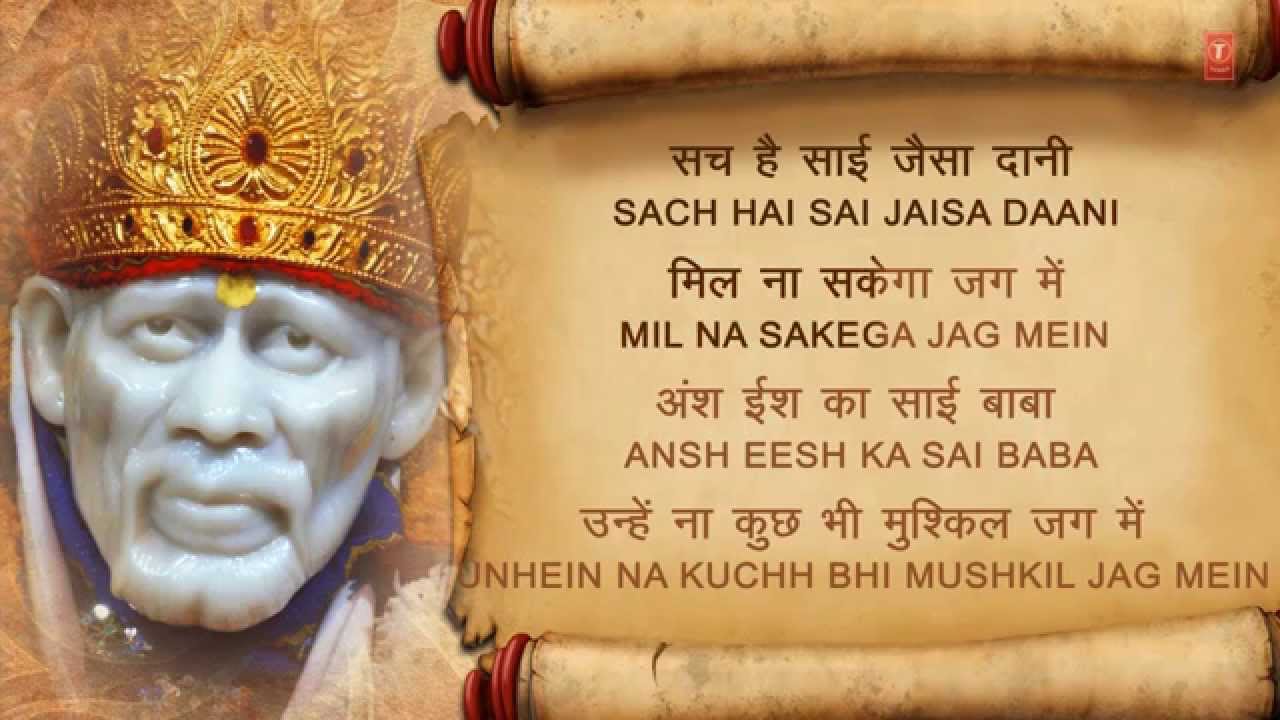
सच है साई जैसा दानी, मिल न सकेगा जग में। अंश ईश का साई बाबा, उन्हें न कुछ भी मुश्किल जग में॥
sacha hai sai jaisa dani, mila na sakega jaga mem. amsha isha ka sai baba, unhem na kucha bhi mushkila jaga mem.
Truly, no other giver like Sai will be found in this world. Sai Baba is a portion of Ish (the Lord) – nothing in the world is hard for him.
स्नेह, शील, सौजन्य आदि का, आभूषण धारण कर। बढ़ता इस दुनिया में जो भी, मानव सेवा के पथ पर॥
sneha, shila, saujanya adi ka, abhushana dharana kara. ba.dhata isa duniya mem jo bhi, manava seva ke patha para.
Wearing the ornament of love, character, kindness. Whoever advances on the path of human service in this world –
वही जीत लेता है जगती के, जन जन का अन्तःस्थल। उसकी एक उदासी ही, जग को कर देती है विह्वल॥
vahi jita leta hai jagati ke, jana jana ka antahsthala. usaki eka udasi hi, jaga ko kara deti hai vihvala.
That one wins the inner heart of every being in the world. Their single sadness makes the world tremble.
जब-जब जग में भार पाप का, बढ़-बढ़ ही जाता है। उसे मिटाने की ही खातिर, अवतारी ही आता है॥
jaba-jaba jaga mem bhara papa ka, ba.dha-ba.dha hi jata hai. use mitane ki hi khatira, avatari hi ata hai.
Whenever in the world the burden of sin grows heavy. To wipe it away, the avatari descends.
पाप और अन्याय सभी कुछ, इस जगती का हर के। दूर भगा देता दुनिया के, दानव को क्षण भर के॥
papa aura anyaya sabhi kucha, isa jagati ka hara ke. dura bhaga deta duniya ke, danava ko kshana bhara ke.
Removing all sin and injustice from this world. He drives away the demon of the world in a moment.
स्नेह सुधा की धार बरसने, लगती है इस दुनिया में। गले परस्पर मिलने लगते, हैं जन-जन आपस में॥
sneha sudha ki dhara barasane, lagati hai isa duniya mem. gale paraspara milane lagate, haim jana-jana apasa mem.
The stream of love-nectar begins to rain in this world. People begin to embrace each other.
ऐसे अवतारी साई, मृत्युलोक में आकर। समता का यह पाठ पढ़ाया, सबको अपना आप मिटाकर॥
aise avatari sai, mrrityuloka mem akara. samata ka yaha patha pa.dhaya, sabako apana apa mitakara.
Such an avatari, Sai, came to the mortal world. He taught the lesson of equality, erasing his own self for everyone.
नाम द्वारका मस्जिद का, रखा शिरडी में साई ने। दाप, ताप, संताप मिटाया, जो कुछ आया साई ने॥
nama dvaraka masjida ka, rakha shiradi mem sai ne. dapa, tapa, samtapa mitaya, jo kucha aya sai ne.
Sai gave the name 'Dwarka-mai' to the mosque in Shirdi. He wiped away whatever heat, suffering, and torment came.
सदा याद में मस्त राम की, बैठे रहते थे साई। पहर आठ ही राम नाम को, भजते रहते थे साई॥
sada yada mem masta rama ki, baithe rahate the sai. pahara atha hi rama nama ko, bhajate rahate the sai.
Always immersed in remembrance of Ram, Sai sat. Eight watches he chanted Ram's name.
सूखी-रूखी ताजी बासी, चाहे या होवे पकवान। सौदा प्यार के भूखे साई की, खातिर थे सभी समान॥
sukhi-rukhi taji basi, chahe ya hove pakavana. sauda pyara ke bhukhe sai ki, khatira the sabhi samana.
Dry or fresh, simple or feast – for Sai, hungry only for love, all were equal.
स्नेह और श्रद्धा से अपनी, जन जो कुछ दे जाते थे। बड़े चाव से उस भोजन को, बाबा पावन करते थे॥
sneha aura shraddha se apani, jana jo kucha de jate the. ba.de chava se usa bhojana ko, baba pavana karate the.
Whatever people offered with love and faith. Baba ate that food joyfully and made it sacred.
कभी-कभी मन बहलाने को, बाबा बाग में जाते थे। प्रमुदित मन में निरख प्रकृति, छटा को वे होते थे॥
kabhi-kabhi mana bahalane ko, baba baga mem jate the. pramudita mana mem nirakha prakrriti, chata ko ve hote the.
Sometimes Baba went to the garden to relax his mind. Joyful in heart, he beheld the radiance of nature.
रंग-बिरंगे पुष्प बाग के, मंद-मंद हिल-डुल करके। बीहड़ वीराने मन में भी स्नेह सलिल भर जाते थे॥
ramga-biramge pushpa baga ke, mamda-mamda hila-dula karake. biha.da virane mana mem bhi sneha salila bhara jate the.
The colourful flowers of the garden, gently swaying. Even into wild barren minds, the stream of love would fill.
ऐसी समुधुर बेला में भी, दुख आपात, विपदा के मारे। अपने मन की व्यथा सुनाने, जन रहते बाबा को घेरे॥
aisi samudhura bela mem bhi, dukha apata, vipada ke mare. apane mana ki vyatha sunane, jana rahate baba ko ghere.
Even at such sweet moments, the suffering, sorrowful, and afflicted. Surrounded Baba to recount their inner pain.
सुनकर जिनकी करूणकथा को, नयन कमल भर आते थे। दे विभूति हर व्यथा, शांति, उनके उर में भर देते थे॥
sunakara jinaki karunakatha ko, nayana kamala bhara ate the. de vibhuti hara vyatha, shamti, unake ura mem bhara dete the.
Hearing their plaintive stories, his lotus eyes filled. Giving vibhuti, he wiped away every pain and filled their hearts with peace.
जाने क्या अद्भुत शिक्त, उस विभूति में होती थी। जो धारण करते मस्तक पर, दुःख सारा हर लेती थी॥
jane kya adbhuta shikta, usa vibhuti mem hoti thi. jo dharana karate mastaka para, duhkha sara hara leti thi.
Some wonderful power was in that vibhuti. Whoever placed it on their forehead had every sorrow lifted.
धन्य मनुज वे साक्षात् दर्शन, जो बाबा साई के पाए। धन्य कमल कर उनके जिनसे, चरण-कमल वे परसाए॥
dhanya manuja ve sakshat darshana, jo baba sai ke pae. dhanya kamala kara unake jinase, charana-kamala ve parasae.
Blessed are those humans who attained the direct darshan of Sai Baba. Blessed are the lotus-hands by which they touched his lotus feet.
काश निर्भय तुमको भी, साक्षात् साई मिल जाता। वर्षों से उजड़ा चमन अपना, फिर से आज खिल जाता॥
kasha nirbhaya tumako bhi, sakshat sai mila jata. varshom se uja.da chamana apana, phira se aja khila jata.
If only, fearless one, you too could meet Sai face to face. The garden of yours, devastated for years, would bloom again today.
गर पकड़ता मैं चरण श्री के, नहीं छोड़ता उम्रभर। मना लेता मैं जरूर उनको, गर रूठते साई मुझ पर॥
gara paka.data maim charana shri ke, nahim cho.data umrabhara. mana leta maim jarura unako, gara ruthate sai mujha para.
If only I could grasp Shri's feet – I would never let go all my life. I would surely persuade him, if Sai were ever to be displeased with me.
Why this chalisa
What the Sai Baba Chalisa is recited for, and what people turn to it for.
9-Thursday Guruvar Vrat
The most-known Sai anushthan is the 9-Thursday Guruvar Vrat: nine consecutive Thursdays of fasting (often only milk-and-fruit), with the Sai Chalisa recited each Thursday morning, a small offering of yellow flowers, sweets, and a ghee diya at the home Sai shrine, and the vrat closing on the ninth Thursday with feeding nine devotees or a small bhandara. The 9-Thursday vow is most commonly undertaken for a specific intention – job, marriage, fertility, illness recovery, court matter, or any major household waiting. Verses 12-22 of the Chalisa narrate the famous Madrasi-bhakta story – the wealthy childless devotee who undertook a Sai vow and was granted a son.
Daily anchor for Shraddha and Saburi
Sai Baba's two-word central teaching – Shraddha (faith) and Saburi (patience) – is the heart of the Chalisa's practice. Many homes recite it daily as a meditation on these two qualities. Verses 23-30 narrate the poet's personal story – days of complete poverty, then meeting a Sai-devotee, taking the journey to Shirdi, and the transformation that followed darshan. This narrative is often used as a household teaching for the young: that turning to Sai with full faith and waiting with patience is the practice.
Help during severe difficulty – the Kashiram episode
Verses 35-52 of the Chalisa narrate the most-quoted miracle in Sai-bhakti: the Kashiram episode. Kashiram was a cloth-trader devotee in Shirdi. Returning home one night through the forest, he was attacked, beaten, and left for dead by robbers. As he lay unconscious, the word 'Sai!' came involuntarily from his lips. Baba in Shirdi heard it, became distressed, and physically manifested his pain in front of horrified onlookers in the Dwarkamai – placing his own hand in burning embers, hurling objects, and wandering in agony – until Kashiram was found and brought back to safety. Many devotees recite the Chalisa daily during stretches of severe difficulty, holding to this teaching: that calling Sai's name with full sincerity is heard, no matter the distance.
For the fake-sadhu episode and protection from deceit
Verses 69-83 narrate the fake-sadhu episode: a charlatan came to Shirdi selling fake medicines, especially preying on the childless. Sai immediately ordered him chased out, with the words "Mere rahte bholi-bhali Shirdi ki janta ko, kaun neech chhalne ka sahas karta hai?" – 'while I am here, who dares to deceive the simple-hearted Shirdi people?' Many devotees recite the Chalisa during stretches when they fear deceit, fraud, or harmful influence. Verse 81 names directly: "palbhar mein aise dhongi, kapti neech lutere ko mahanasha ke mahagart mein pahuncha dun" – Sai destroys deceivers in a moment.
Companion to the wider Sai-bhakti corpus
The Chalisa is one of three pillars of household Sai-bhakti: (1) the Sai Satcharitra – the 53-chapter biography by Hemadpant, traditionally read as a 7-day or weekly parayana; (2) the Sai Aarti – the four daily aartis (Kakad, Madhyana, Dhup, Shej) sung at the Shirdi Samadhi Mandir; (3) this Chalisa for daily recitation. Many homes also pair the Chalisa with the Hanuman Chalisa (Sai is identified with Hanuman in verse 3) and the Shiv Chalisa (Sai is identified with Shankar in verse 5).
For the universal teaching beyond religion
Verses 55-58 carry the Chalisa's central theological teaching: "As dear were Hindus and Muslims, so were Sikhs and Christians; Baba broke the distinction of temple and mosque; Ram and Rahim were both his, Krishna and Karim and Allah-tala". This makes the Sai Chalisa especially central for households that hold the unity-of-religions teaching as primary, and for inter-faith families. The mosque where Sai lived – named Dwarka-mai by Sai himself (verse 91) – preserves this universal teaching at the heart of every Sai shrine.
Origin
The Sai Chalisa is the canonical 102-verse expanded narrative form, distinct from the standard 40-verse Chalisa pattern. It carries no clear single signature line, but its structure – particularly the long Kashiram and fake-sadhu episodes – follows a literary tradition associated with the early-to-mid 20th century Madhav Adkar / Krishan Lal Dhawan compositions. Many published copies attribute it simply to "tradition" – an honesty worth preserving. The text is generally placed in the 1930s-1950s CE, written in a Hindi with Marathi-influenced syntax (reflecting Sai's Maharashtra origins) and aimed at a mass household readership in the decades immediately after Baba's mahasamadhi in 1918.
Sai Baba himself is one of the most enigmatic figures in modern Hindu spirituality. He arrived in Shirdi (a small village in what is now the Ahmednagar district of Maharashtra) around 1858, accompanying a wedding party, as a beautiful child of perhaps 16 (verses 7-10 of the Chalisa narrate this exactly). He never identified his caste, religion, parents, or birthplace – verses 1-2 of the Chalisa make this central: "Kaun hai mata, pita kaun hai, ye na kisi ne bhi jana; kahan janma Sai ne dhara, prashna paheli raha bana" – 'who was his mother, who his father – nobody ever knew; where Sai took birth has remained a riddle.' He lived in a dilapidated mosque he renamed Dwarkamai (verse 91), kept a sacred fire (dhuni) burning continuously for sixty years, and gave udi (vibhuti from this fire) as the primary prasad to devotees – a practice that continues at the Shirdi Samadhi Mandir today.
The theological identity of Sai is itself the Chalisa's opening teaching: verses 3-5 list the various identifications devotees offered – Lord Ram (verse 3), Hanuman (verse 3), Ganpati (verse 4), Krishna-Devakinandan (verse 4), Shankar/Shiva (verse 5), Dattatreya (verse 5). Verse 6 then resolves: "Kuch bhi mano unko tum, par Sai hain sachche bhagwan" – 'whatever you may believe him to be, Sai is the true God.' This is the Chalisa's deliberate refusal to be claimed by any one tradition. The Sai movement after Baba's mahasamadhi in 1918 was institutionalised through the Sai Satcharitra (the 1929 biography by Hemadpant) and the Shirdi Sai Samsthan Trust, both of which preserve this trans-religious universalism.
The Chalisa's wider companions are the Sai Satcharitra (the 53-chapter authoritative biography), the Sai Aarti (the four daily aartis at the Shirdi Samadhi Mandir), the Hanuman Chalisa (Sai's Hanuman-identification, verse 3), the Shiv Chalisa (Sai's Shankar-identification, verse 5), and the Sai Mantra (Om Sai Ram) which is the standard japa for Sai-bhaktas across all sampradayas.
How to recite
A simple, sustainable approach. Nothing here is a hard rule – devotion shapes the form, not the other way around.
-
Preparation
Bathe and wear clean clothes – traditionally white or yellow, the colours associated with Sai. Sit facing east or before the home Sai murti / photograph (the standard image is Sai seated on the stone, in his fakir kafni, with his hand on the right knee). The traditional offerings: udi (vibhuti from the Shirdi dhuni, if available – many homes have a small bottle from a previous yatra), yellow flowers, a small ghee diya, fruits, and any sweet. Many homes keep the photograph of the Shirdi Samadhi murti at the home altar.
-
Posture and start
Sit cross-legged on a mat with your spine comfortably straight. Bow once with the call "Om Sai Ram". Take a moment of silence. If reciting on a Thursday for Guruvar Vrat, on Guru Purnima, on Mahasamadhi Day, on Ramnavami, before a Shirdi yatra, or for a specific intention, offer a brief sankalp. The 102-verse form takes about 18-20 minutes – longer than the standard Chalisas – so allow the time.
-
Recitation
Move through the 102 chaupais without rushing. The Chalisa naturally divides into four sections: verses 1-30 (Sai's arrival in Shirdi and early devotion), verses 31-52 (the Kashiram-attack-and-rescue episode), verses 53-66 (Sai's universal teaching across religions), verses 67-90 (the fake-sadhu episode and Sai's protective wrath), verses 91-102 (Sai's daily practice and the closing prayer). Many devotees mark a small pause between sections.
-
After
Sit quietly with eyes closed for a moment. Many people end with the Sai mantra Om Sai Ram recited 11, 21, or 108 times. Take a small pinch of udi to the forehead and tongue (the traditional Sai-prasad). Offer the bhog and take a small portion. Some traditions add a closing line of namaskar to the home Sai shrine and a final reading of one of the four Sai aartis (Kakad, Madhyana, Dhup, or Shej) depending on the time of day.
-
Daily practice and special days
One paath a day – Thursday morning is the standard – is enough for steady daily practice. The 9-Thursday Guruvar Vrat is the major household anushthan: nine consecutive Thursdays of fasting and Chalisa-paath, closing with feeding nine devotees on the ninth Thursday. Guru Purnima (Ashadh Purnima, July) is the supreme Sai festival. Mahasamadhi Day on Vijayadashami (the Vijayadashami of 1918 was when Baba left the body, October 15) is the second major day. Ramnavami at Shirdi (Chaitra Shukla Navami) is the third. For Shirdi pilgrims, the Chalisa is traditionally recited at the Samadhi Mandir, the Dwarkamai (verse 91), and at the Chavadi (the small structure where Baba slept on alternate nights).