On this page
Lyrics with meaning
The complete Batuk Bhairav Chalisa – two opening dohas, forty chaupais, and a closing doha. A short English meaning sits below every verse. Toggle the script to read in Devanagari, romanized, or both side-by-side.
विश्वनाथ को सुमरि मन, धर गणेश का ध्यान। भैरव चालीसा पढूं, कृपा करहु भगवान॥
Vishvanath ko sumari man, dhar Ganesh ka dhyan. Bhairav Chalisa padhun, kripa karahu bhagwan.
Remembering Vishvanath in the mind, holding Ganesh in meditation. I read the Bhairav Chalisa – show grace, Lord.
बटुकनाथ भैरव भजूं, श्री काली के लाल। मुझ दास पर कृपा कर, काशी के कुतवाल॥
Batuknath Bhairav bhajun, Shri Kali ke lal. Mujh das par kripa kar, Kashi ke kutwal.
I worship Batuknath Bhairav, the beloved son of Shri Kali. Show grace upon me, your servant – kotwal of Kashi.
जय जय श्री काली के लाला। रहो दास पर सदा दयाला॥
Jai jai Shri Kali ke lala. Raho das par sada dayala.
Hail, hail, beloved son of Shri Kali. Always be compassionate toward your servant.
भैरव भीषण भीम कपाली। क्रोधवन्त लोचन में लाली॥
Bhairav bhishan bhim kapali. Krodhvant lochan mein lali.
Fearsome Bhairav, mighty skull-bearer. Wrathful, with red eyes.
कर त्रिशूल है कठिन कराला। गल में प्रभु मुंडन की माला॥
Kar trishul hai kathin karala. Gal mein Prabhu mundan ki mala.
Trident in hand, hard and fierce. A garland of severed heads at your throat.
कृष्ण रूप तन वर्ण विशाला। पीकर मद रहता मतवाला॥
Krishna roop tan varn vishala. Peekar mad rahta matwala.
Dark in form, with a vast body. Drinking madhu, you remain ecstatic.
रुद्र बटुक भक्तन के संगी। प्रेतनाथ भूतेश भुजंगी॥
Rudra Batuk bhaktan ke sangi. Pretnath Bhutesh bhujangi.
Rudra Batuk, companion of devotees. Pretnath, Bhutesh, with the serpent.
खप्पर खड्ग लिये बलवाना। रूप चतुर्भुज नाथ बखाना॥
Khappar khadg liye balwana. Roop chaturbhuj nath bakhana.
Mighty one with the khappar (skull-bowl) and sword. Lord, your form is described as four-armed.
त्रैल तेश है नाम तुम्हारा। चक्रदण्ड अमरेश पियारा॥
Trail-tesh hai naam tumhara. Chakra-dand Amaresh piyara.
Trail-tesh is your name. Chakra-dand, the beloved Amaresh.
शेखर चन्द्र कपाल विराजै। स्वान सवारी पै प्रभु गाजै॥
Shekhar Chandra kapal virajai. Swan savari pai Prabhu gajai.
The crescent moon adorns your skull-crown. Lord, you ride upon the dog as your vehicle.
शिव नकुलेश चण्ड हो स्वामी। बैजानाथ प्रभु नमो नमामी॥
Shiv Nakul-esh Chand ho swami. Baijanath Prabhu namo namami.
Shiv-Nakul-esh, fierce Lord. Baijnath Prabhu, salutations again and again.
अश्वनाथ क्रोधेश बखाने। भैंरो काल जगत न जाने॥
Ashvanath Krodhesh bakhane. Bhairo Kaal jagat na jane.
Ashvanath, Krodhesh, you are described. Bhairon-Kaal, the world cannot fully know you.
गायत्री कहैं निमिष दिगम्बर। जगनाथ उन्नत आडम्बर॥
Gayatri kahain nimish digambar. Jagnath unnat aadambar.
Gayatri calls you the moment-clad-in-space. Jagnath, with grand splendour.
क्षेत्रपाल दशपाणि कहाये। मंजुल उमानन्द कहलाये॥
Kshetrapal dash-pani kehaye. Manjul Umanand kehlaye.
Kshetrapal with ten hands you are called. The lovely Umanand.
चक्रनाथ भक्तन हितकारी। कहैं त्रयम्बक सब नर नारी॥
Chakranath bhaktan hitkari. Kehain Trayambak sab nar nari.
Chakranath, benefactor of devotees. Men and women all call you Trayambak.
संहारक सुनन्द सब नामा। करहु भक्त के पूरण कामा॥
Sanharak Sunand sab nama. Karahu bhakt ke puran kama.
Sanharak, Sunand – all names. Fulfil the wishes of your devotees.
नाथ पिशाचन के हो प्यारे। संकट मेटहु सकल हमारे॥
Nath pishachan ke ho pyare. Sankat metahu sakal hamare.
Lord, beloved of the pishachas. Wipe away all our troubles.
कृत्यायू सुन्दर आनन्दा। भक्त जनन के काटहु फंदा॥
Krityayu sundar anand-da. Bhakt janan ke kataahu phanda.
Krityayu, beautiful joy-giver. Cut the noose of your devotees.
कारण लम्ब आप भयभंजन। नमोनाथ जय जनमन रंजन॥
Karan lamb aap bhay-bhanjan. Namo-nath jai janman ranjan.
Cause-pillar, breaker of fear. Namo-nath, hail to the heart-delighter.
हो तुम देव त्रिलोचन नाथा। भक्त चरण में नावत माथा॥
Ho tum dev trilochan natha. Bhakt charan mein navat matha.
You are the three-eyed Lord. The devotee bows their head at your feet.
त्वं अशितांग रुद्र के लाला। महाकाल कालों के काला॥
Tvam Ashitanga Rudra ke lala. Mahakal kaalon ke kala.
You are the Ashitanga, beloved son of Rudra. Mahakaal, the time of times.
ताप विमोचन अरिदल नासा। भाल चन्द्रमा करहिं प्रकाशा॥
Taap vimochan ari-dal nasa. Bhaal chandrama karahin prakasha.
Lifter of suffering, destroyer of enemy armies. The crescent moon shines on your forehead.
श्वेत काल अरु लाल शरीरा। मस्तक मुकुट शीश पर चीरा॥
Shvet kaal aru lal sharira. Mastak mukut shish par chira.
White, dark, and red-bodied. A crown on the head, marked at the top.
काली के लाला बलधारी। कहां तक शोभा कहुं तुम्हारी॥
Kali ke lala bal-dhari. Kahan tak shobha kahun tumhari.
Beloved son of Kali, mighty one. How far can I describe your radiance?
शंकर के अवतार कृपाला। रहो चकाचक पी मद प्याला॥
Shankar ke avtar kripala. Raho chakachak pi mad pyala.
Compassionate avatar of Shankar. Stay sharp-bright, drinking the cup of madhu.
काशी के कुतवाल कहाओ। बटुकनाथ चेटक दिखलाओ॥
Kashi ke kutwal kahao. Batuknath chetak dikhlao.
You are called the kotwal of Kashi. Batuknath, show your magic.
रवि के दिन जन भोग लगावें। धूप दीप नैवेद्य चढ़ावें॥
Ravi ke din jan bhog lagavein. Dhoop deep naivedya chadhavein.
On Ravi-vaar (Sunday), devotees offer the bhog. They offer dhoop, deep, and naivedya.
दरशन करके भक्त सिहावें। दारुड़ा की धार पिलावें॥
Darshan karke bhakt sihavein. Daruda ki dhar pilavein.
Taking your darshan, devotees rest assured. They offer you a stream of daruda (the ritual liquor offering – unique to the Bhairav tradition).
मठ में सुन्दर लटकत झावा। सिद्ध कार्य कर भैरों बाबा॥
Math mein sundar latkat jhava. Siddh karya kar Bhairon Baba.
In your math (shrine), a beautiful jhava swings. Bhairon Baba accomplishes the perfected work.
नाथ आपका यश नहीं थोड़ा। कर में सुभग सुशोभित कोड़ा॥
Nath aapka yash nahin thoda. Kar mein subhag sushobhit koda.
Lord, your fame is not little. In your hand, the auspicious whip beautifully shines.
कटि घुंघरू सुरीले बाजत। कंचनमय सिंहासन राजत॥
Kati ghunghru surile bajat. Kanchan-may sinhasan rajat.
Melodious bells sound at your waist. Your golden throne shines.
नर नारी सब तुमको ध्यावहिं। मनवांछित इच्छाफल पावहिं॥
Nar nari sab tumko dhyavahin. Manvanchhit iccha-phal pavahin.
Men and women all meditate upon you. They receive their heart's desired fruit.
भोपा हैं आपके पुजारी। करें आरती सेवा भारी॥
Bhopa hain aapke pujari. Karein aarti seva bhari.
The bhopas are your priests. They perform aarti and great seva.
भैरव भात आपका गाऊँ। बार बार पद शीश नवाऊँ॥
Bhairav bhaat aapka gaun. Baar baar pad shish navaun.
I sing of your bhaat (the brother's wedding gift to the sister). Again and again I bow at your feet. (The Aladi-bhaat episode, the heart of the Batuk-Bhairav tradition, begins here.)
आपहि वारे छीजन धाये। ऐलादी ने रुदन मचाये॥
Aaphi vare chhijan dhaye. Eladi ne rudan machaye.
You yourself rushed to her need. Aladi made a great cry.
बहन त्यागि भाई कहाँ जावे। तो बिन को मोहि भात पिन्हावे॥
Bahan tyagi bhai kahan jave. To bin ko mohi bhaat pinhave.
(Aladi cried:) 'Where can a brother go, abandoning his sister? Without you, who will give me my bhaat?' (The bhaat – the brother's ritual gift to his sister at her wedding.)
रोये बटुक नाथ करुणा कर। गये हिवारे मैं तुम जाकर॥
Roye Batuk Nath karuna kar. Gaye hivare main tum jaakar.
Batuknath wept with compassion. You went rushing to your sister.
दुखित भई ऐलादी बाला। तब हर का सिंहासन हाला॥
Dukhit bhai Eladi bala. Tab Har ka sinhasan hala.
When the maiden Aladi grew sorrowful. Then Hara's (Shiva's) throne shook. (The classical Hindu signal that a great calamity is unfolding.)
समय ब्याह का जिस दिन आया। प्रभु ने तुमको तुरत पठाया॥
Samay byah ka jis din aaya. Prabhu ne tumko turat pathaya.
On the day the marriage hour came. The Lord (Shiva) sent you immediately.
विष्णु कही मत विलम्ब लगाओ। तीन दिवस को भैरव जाओ॥
Vishnu kahi mat vilamb lagao. Teen divas ko Bhairav jao.
Vishnu said: do not delay. Bhairav, go for three days.
दल पठान संग लेकर धाया। ऐलादी को भात पिन्हाया॥
Dal Pathan sang lekar dhaya. Eladi ko bhaat pinhaya.
Taking a Pathan-army with you, you rushed. You gave Aladi her bhaat.
पूरन आस बहन की कीनी। सुर्ख चुन्दरी सिर धर दीनी॥
Puran aas bahan ki kini. Surkh chundri sir dhar dini.
You fulfilled the sister's hope completely. Placing the red chundri on her head. (The chundri – the red marriage-cloth – the brother places on the sister's head as the formal bhaat.)
जय जय जय भैरव बटुक, स्वामी संकट टार। कृपा दास पर कीजिए, शंकर के अवतार॥
Jai jai jai Bhairav Batuk, swami sankat taar. Kripa das par kijiye, Shankar ke avtar.
Hail, hail, hail Bhairav Batuk, Lord, lift away trouble. Show grace upon your servant, avatar of Shankar.
जो यह चालीसा पढ़े, प्रेम सहित सत बार। उस घर सर्वानन्द हों, वैभव बढ़ें अपार॥
Jo yah Chalisa padhe, prem sahit sat baar. Us ghar sarvanand hon, vaibhav badhein apaar.
Whoever recites this Chalisa with love a hundred times. That home becomes filled with all-joy, and prosperity grows boundlessly.
Why this chalisa
What the Batuk Bhairav Chalisa is recited for, and what people turn to it for.
Anchor for sister-brother bhaat tradition
The Batuk Bhairav Chalisa's most distinctive section is verses 32-40 – the Aladi-bhaat story. Aladi is Batuk's sister; at her wedding, she cried out for her brother to bring her the bhaat (the brother's ritual gift). Batuk rushed to her with a Pathan-army and placed the red chundri on her head. This episode makes Batuk the household-protector of every brother-sister relationship in Marwari and Gujarati tradition. Many sisters recite the Chalisa during their daughters' weddings or during family stress between brothers and sisters.
Centrepiece of Bhairav Ashtami
Bhairav Ashtami on Margashirsha Krishna Ashtami (November-December) is the year's major Batuk Bhairav night. Many devotees recite the Chalisa eleven or twenty-one times after sunset. Krishna-paksha Ashtami of every fortnight is the monthly Bhairav night. Pair with the Bhairav Chalisa for the complete sequence – the parent-form of Batuk.
For child-protection and removal of fear
Batuk's identity as the youthful boy form of Bhairav makes him the household-protector of children especially. Verse 17 names him as bhay-bhanjan (breaker of fear). Many Marwari and Gujarati households recite the Chalisa daily during stretches of children's illness, school-related stress, or child-protection vows. (This is a verse of devotional faith, not a replacement for medical or professional care.)
100-paath wish-fulfilment anushthan
The closing doha 2 names the Batuk-specific anushthan: "jo yah Chalisa padhe, prem sahit sat baar; us ghar sarvanand hon, vaibhav badhein apaar" – 'whoever recites this Chalisa with love a hundred times, that home becomes filled with all-joy and great prosperity.' Many devotees take a 100-paath vow over 21-41 days for specific wishes.
Companion to Kali and the wider Shaiva-Shakta tradition
Verse 1 establishes Batuk as "Shri Kali ke lala" – the beloved son of Kali. Pair with the Kali Chalisa on Krishna-paksha Ashtami nights. The Bhairav Chalisa is the parent form; the Kaal Bhairav Chalisa is the fierce time-form. Many devotees recite all four during major Bhairav/Kali festivals.
For Marwari and Gujarati household worship
The Aladi-bhaat episode (verses 32-40) makes Batuk Bhairav especially important in Marwari, Gujarati, and Rajasthani Vaish households where the brother-sister bond is anchored by the Bhai Dooj and Raksha Bandhan rituals. Many homes invoke Batuk specifically for sibling-protection wishes. Pair with the Yamuna Chalisa on Bhai Dooj for the full sister-brother sequence.
Origin
The Batuk Bhairav Chalisa carries no clear signature line. Many published copies attribute it simply to "tradition." The text is generally placed in the 18th-19th century CE by language and content, written in a Hindi with Awadhi influence. The Chalisa's structural innovation is the Aladi-bhaat narrative (verses 32-40) – a folk-mythological episode unique to the Batuk Bhairav tradition, especially preserved in Marwari, Gujarati, and Rajasthani folk-storytelling.
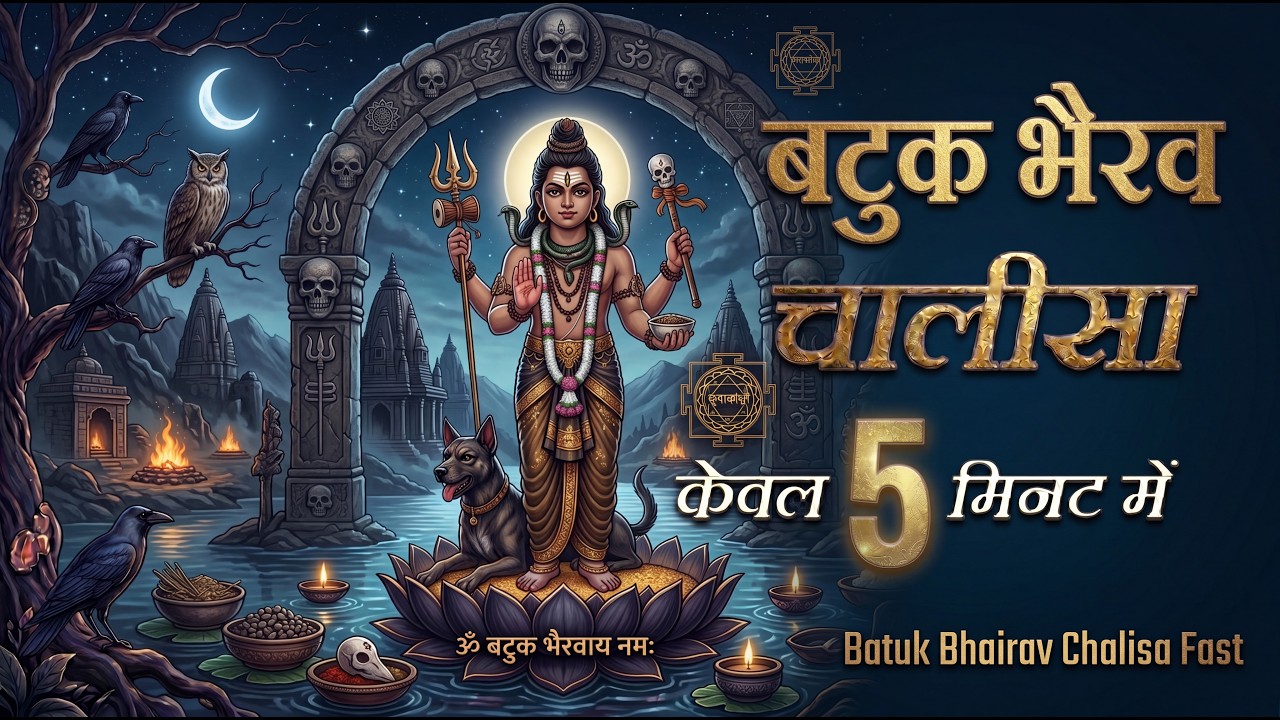
Batuk Bhairav himself is the youthful boy form of Bhairav – Shiva's fierce form. The classical Tantric Ashta-Bhairav tradition names eight forms of Bhairav: Asitanga, Ruru, Chanda, Krodha, Unmatta, Kapala, Bhishana, Samhara. Batuk is sometimes identified with Asitanga (verse 19 of this Chalisa names him directly), the youthful black form. The youthful form is held to be especially benevolent and approachable, distinct from the fierce Kaal Bhairav. Iconographically Batuk is depicted as a boy of about 12-16 years, with kohl-darkened eyes, holding a trident-skull-bowl-sword, riding a dog (verse 8), with the crescent moon on his head (verse 8) and the snake-girdle.
The Aladi-bhaat narrative (verses 32-40) is one of the most beloved folk stories in north Indian Bhairav tradition. The story: Aladi (sometimes Eladi, sometimes Yelladi) is Batuk's sister. At the time of her wedding, she cried out to her brother to bring her the bhaat – the formal gift the brother gives the sister at her wedding (a saree, ornaments, and importantly the red chundri placed on her head). Batuk Bhairav, busy with cosmic duties, was reminded by Vishnu (verse 38) and went immediately, taking a Pathan-army (a folk-detail that places the story in medieval Rajasthan). He placed the red chundri on Aladi's head and fulfilled the bhaat ritual. The story is the source of the household practice in Marwari communities of invoking Batuk specifically for sister-brother protection rites.
The Chalisa's wider companions are the Bhairav Chalisa (the parent form), the Kaal Bhairav Chalisa (the time-form), the Kali Chalisa (Batuk's mother), the Shiv Chalisa (Batuk is Shiva's avatar), and the Hanuman Chalisa (paired in protection-practice).
How to recite
A simple, sustainable approach. Nothing here is a hard rule – devotion shapes the form, not the other way around.
-
Preparation
Bathe and wear clean clothes – traditionally black or red. Sit facing south or before the home Batuk Bhairav murti. The traditional offerings: til (sesame), urad dal, jaggery, kumkum, single ghee diya, a piece of sweet, and (in some Tantric traditions) a small offering of daruda (ritual liquor – verse 26 names this). Bhairav's vehicle is the dog – feed a stray dog as part of the puja.
-
Posture and start
Sit cross-legged with your spine straight. Bow once. Take a moment of silence. If reciting on Bhairav Ashtami, on Krishna-paksha Ashtami, on Bhai Dooj for sibling-protection, or for a specific intention, offer a brief sankalp. Begin with the two opening dohas slowly. Batuk-recitation is traditionally an evening (pradosh) practice.
-
Recitation
Move through the forty chaupais without rushing. Verses 1-9 establish the iconography. Verses 7-19 enumerate the many names. Verses 32-40 narrate the Aladi-bhaat story – often slowed down particularly in homes where sister-brother protection is the intention. End with the two closing dohas.
-
After
Sit quietly with eyes closed. Many people end with the bija mantra Om Hreem Bham Batuk-Bhairavaya Namah recited 11 or 21 times. Offer the bhog and feed a stray dog if possible.
-
Daily practice and special days
Sundays and Tuesdays are auspicious. Bhairav Ashtami on Margashirsha Krishna Ashtami (November-December) is the year's major day. Krishna-paksha Ashtami of every fortnight is the monthly Bhairav night. Bhai Dooj for the sister-brother sequence in some traditions.